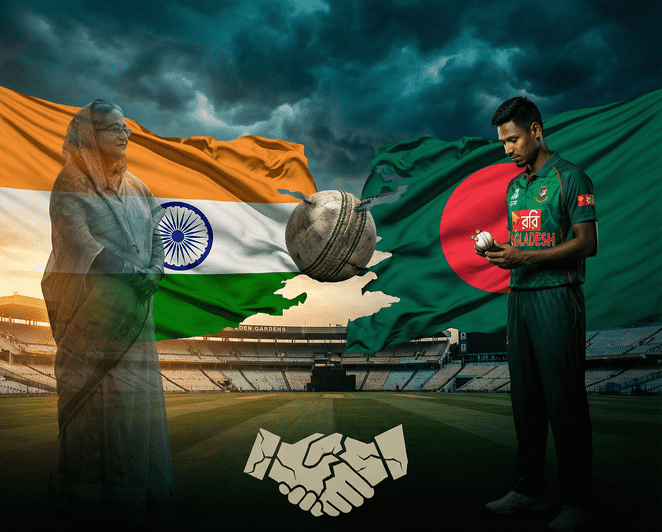
The Voice That Warned—And Was Ignored
Ahmed Sajjadul Alam has been involved in Bangladesh sports administration for decades. A veteran organizer, a BCB director, someone who'd seen Bangladesh cricket grow from associate status to Full Member, from wooden spoons to Test cricket achievements.
So when he warned in early 2026 that the government's decision to boycott the T20 World Cup reflected dangerous interference and would cost Bangladesh cricket dearly—in finances, in ICC standing, in international credibility—people should have listened.
They didn't. Or rather, they listened and dismissed it. The interim government proceeded with the boycott. The Bangladesh Cricket Board, caught between government directives and ICC schedules, sided with Dhaka. And Bangladesh was expelled from the tournament, replaced by Scotland.
Now, weeks after the decision, as the tournament proceeds without Bangladesh and the financial and diplomatic consequences become clearer, Alam's warnings look prescient. But being right doesn't make it hurt less.
WinTK, part of the WINTK brand covering the intersection of politics and sport in South Asia, examines Ahmed Sajjadul Alam's warnings about government interference in Bangladesh cricket—and why his concerns about the cost to the sport have proven devastatingly accurate.
Who Is Ahmed Sajjadul Alam?
To understand why Alam's warnings carried weight, you need to understand his background in Bangladesh cricket administration.
Alam—often known as Sajjadul Alam Bobby—has been a fixture in Bangladesh sports for years. He served as a BCB director nominated by the National Sports Council, the government body that oversees all sports federations in Bangladesh.
His tenure included both triumphs and controversies. He was there during Bangladesh's rise as a competitive cricket nation. He participated in decisions that shaped the team's development, the domestic structure, the infrastructure investments that turned Bangladesh into a respectable cricket nation.
He also experienced firsthand the tensions between cricket administration and government oversight. Bangladesh's cricket governance operates under the National Sports Council's authority, which means political changes often ripple through the BCB.
When Sheikh Hasina's government fell in August 2024, those ripples became tidal waves.
The 2024 BCB Shake-Up
In August 2024, shortly after the interim government took power following Hasina's ouster, the National Sports Council requested two BCB directors—Jalal Yunus and Ahmed Sajjadul Alam—to resign. The new government's Sports Adviser, Asif Mahmud, had called for reforms in the BCB and other sports federations.
Yunus resigned immediately. Alam refused.
"The National Sports Council's decision is government interference," Alam told ESPNcricinfo at the time. "I am shocked with their decision. It is completely unacceptable. I have been made a councillor and subsequently a director for four years. I would have wanted to serve cricket for the rest of my term."
The NSC didn't communicate with Alam. A BCB board meeting was held at the sports ministry where Alam wasn't even invited. The NSC appointed Faruque Ahmed and Nazmul Abedeen Fahim as BCB directors in Alam's and Yunus's places.
For Alam, it was textbook government interference—exactly the kind of political manipulation that the ICC explicitly prohibits and that has gotten other cricket boards suspended from international cricket.
The Warning About T20 World Cup Boycott
When the crisis over Bangladesh's T20 World Cup participation escalated in January 2026, Alam was no longer a BCB director. He'd been removed months earlier. But he still had deep connections to Bangladesh cricket and strong opinions about the government's handling of the situation.
As the BCB and ICC negotiated over relocating Bangladesh's matches from India to Sri Lanka, as the interim government weighed in with security concerns, Alam spoke out publicly with a stark warning.
According to sources close to the discussions and comments to Al Jazeera, Alam argued that the decision to boycott the World Cup reflected government interference in cricket matters that should have been handled by the cricket board itself.
His specific warnings centered on two major concerns: financial losses and damage to Bangladesh's standing within the ICC.
The Financial Cost
Alam understood what boycotting the World Cup would cost Bangladesh cricket financially. The numbers weren't trivial.
World Cup participation generates revenue through multiple channels. There's the ICC's distribution of tournament revenue to participating nations. There's sponsorship deals tied to World Cup participation. There's broadcast revenue sharing. There's merchandise sales. There's increased domestic engagement that drives local cricket economy.
Missing the tournament meant forfeiting all of it.
Multiple senior BCB sources confirmed to various media outlets that the move would reduce the board's potential earnings from the ICC. The exact amount remains undisclosed—cricket board finances are notoriously opaque—but estimates suggest losses in the millions of dollars.
For a cricket board that doesn't have India's resources or England's commercial infrastructure, that's not money you casually walk away from.
Alam's warning was simple: this decision will cost us money we can't afford to lose, and it will have knock-on effects for player development, domestic infrastructure, and cricket programs we can't easily replace.
Captains' Carnival Photo: The Empty Space Where Litton Das Should Have Been
The ICC Standing Damage
But for Alam, the financial cost wasn't even the worst part. More damaging was what the boycott would do to Bangladesh's influence and credibility within the ICC.
Bangladesh had spent two decades building its position in world cricket. From associate status in the 1990s to Test status in 2000. From being easy beats to competitive opponents. From having no voice in ICC meetings to being a Full Member with voting rights and tournament hosting capabilities.
That took time, effort, diplomatic skill, and careful relationship-building with other cricket boards.
A government-ordered boycott of the World Cup undermined all of it.
Syed Ashraful Haque, another former BCB director who helped secure Bangladesh's Test status, echoed Alam's concerns in his own public comments. Haque argued that Bangladesh's influence in world cricket had weakened and that the crisis could have been resolved through dialogue rather than confrontation.
When you're a smaller cricket nation without India's economic clout or Australia's historical dominance, your influence comes from being seen as reasonable, cooperative, and committed to the game's global structures. Boycotting a World Cup over security concerns the ICC deemed unfounded damages that reputation.
Other Full Members would remember. The ICC would remember. And when future votes came up, when hosting rights were distributed, when tournament schedules were arranged, Bangladesh's voice might carry less weight because they'd shown they were willing to walk away when things got difficult.
Government Interference vs. Cricket Governance
At the heart of Alam's warnings was a fundamental question: who should make decisions about Bangladesh cricket—the cricket board or the government?
The International Cricket Council has clear rules about this. ICC regulations explicitly prohibit government interference in member board operations. The requirement exists precisely because cricket's history is littered with examples of governments using sport for political purposes, damaging the game in the process.
Zimbabwe and Sri Lanka have both faced ICC sanctions for government interference in their cricket boards. In Zimbabwe's case, it led to suspension from international cricket. The consequences were severe—lost matches, lost revenue, damaged player careers.
Alam saw the T20 World Cup boycott as exactly that kind of government interference.
Yes, the interim government had legitimate security concerns about sending a national team to India given the diplomatic tensions between the countries. Yes, they had political reasons for their stance on the Sheikh Hasina issue and minority violence concerns.
But from Alam's perspective, the government should have worked through the BCB rather than directing it. The cricket board should have been empowered to negotiate with the ICC on its own terms, to make decisions based on cricket rather than politics, to find solutions that balanced security concerns with sporting commitments.
Instead, Youth and Sports Adviser Asif Nazrul publicly announced that the decision not to travel was taken at cabinet level—at the highest levels of government, not by cricket administrators.
For Alam, that crossed a line. That was government interference, pure and simple. And it would cost Bangladesh cricket.
The ICC's Perspective
What made Alam's warnings more urgent was his understanding of how the ICC viewed government interference.
When BCB President Faruque Ahmed—the very man appointed to replace Alam and others in the August 2024 shake-up—later faced pressure from the government to resign in May 2025, he explicitly invoked ICC anti-interference rules in refusing to step down.
"I cannot resign without any reason," Faruque told Prothom Alo. "The ICC strictly prohibits government interference in cricket board activities."
Multiple former and current cricketers advised Faruque not to resign, precisely because doing so under government pressure would be seen as capitulating to political interference. One anonymous former captain said: "Nobody should be allowed to play games with Bangladesh cricket."
The irony wasn't lost on observers. Faruque, appointed through government intervention, now resisted government removal by citing anti-interference rules. The very rules Alam had invoked when he himself was removed.
It demonstrated the tangled relationship between Bangladesh cricket and government oversight, and why Alam's warnings about the cost of that entanglement carried such weight.
India-Bangladesh Relations Crisis: How Cricket Became Collateral Damage
The Dialogue That Didn't Happen
A key part of Alam's critique was that the crisis could have been resolved through dialogue rather than confrontation.
He wasn't alone in this view. Syed Ashraful Haque made the same argument. Several cricket analysts suggested compromise solutions that would have kept Bangladesh in the tournament while addressing security concerns.
The possibilities included:
Neutral venue arrangements: Playing Bangladesh's matches in Sri Lanka, similar to the arrangement already made for Pakistan. The ICC had accommodated Pakistan's refusal to play in India. Why not Bangladesh?
Enhanced security measures: Independent security assessments, additional protection details, different travel arrangements. The ICC had offered cooperation on security planning.
Gradual engagement: Perhaps playing some matches in India under strict security, then reassessing. Or playing World Cup matches while continuing diplomatic dialogue on the broader India-Bangladesh tensions.
Third-party mediation: Involving neutral parties to facilitate discussions between the BCB, ICC, BCCI, and Bangladesh government.
But dialogue requires both sides being willing to talk, and it requires cricket administrators having the autonomy to negotiate.
When the interim government took a hard line—"we will not send the team to India under current conditions"—it limited the BCB's negotiating room. When the ICC insisted "there is no credible security threat," it limited flexibility on the other side.
Alam's point was that if the BCB had been free to engage in cricket-to-cricket board negotiations without government directives constraining them, creative solutions might have emerged.
Instead, the issue became a political standoff where neither side could back down without losing face. And Bangladesh cricket paid the price.
The Pushback Against Alam's Warnings
Not everyone agreed with Alam's analysis. Supporters of the government's decision argued he was missing the bigger picture.
Shamim Chowdhury, head of research at T Sports in Dhaka, told Al Jazeera that the issue had hurt Bangladesh's sentiments and questioned the ICC's role. "The ICC's double standards have been exposed," he said, pointing to the fact that India and Pakistan both received special accommodations but Bangladesh didn't.
Abu Zarr Ansar Ahmed, a sports journalist in Dhaka, emphasized that security concerns went beyond players to include staff, journalists, and supporters. With national elections approaching, he warned that even a single incident involving Bangladeshi nationals in India could trigger widespread anger at home.
"From that perspective, Bangladesh made the right decision," he argued.
This was the fundamental disagreement. Alam and others saw the decision through a cricket administration lens—what will this cost the board, what precedent does it set, how does it affect our ICC relationships?
Supporters saw it through a political and security lens—how can we risk our players' safety, how can we be seen as caving to Indian pressure, how do we protect national dignity?
The problem was that both perspectives had validity, and the structure of Bangladesh cricket governance—with government oversight through the NSC—meant these tensions couldn't be easily resolved.
The Aftermath: Alam's Predictions Come True
As the T20 World Cup proceeded without Bangladesh in February 2026, the costs Alam had warned about became increasingly apparent.
Financial losses: The BCB acknowledged reduced ICC earnings. The hastily organized "Odommo Bangladesh T20 Cup" generated 25 million taka ($200,000) in prize money—a fraction of what World Cup participation would have brought in tournament payments, sponsorships, and broadcast revenue.
Player development: Bangladesh cricketers missed the chance to compete against the world's best in high-pressure World Cup matches. That's experience you can't replicate in domestic cricket. For younger players, it might have been their only World Cup. Those opportunities don't come back.
ICC relationships: Multiple BCB sources speaking anonymously expressed concern about Bangladesh's diminished influence. When you're the team that got kicked out of a World Cup, when you're seen as politically unreliable, your voice carries less weight in ICC meetings and future decisions.
Precedent setting: The government's intervention in the World Cup decision set a precedent that politics could override cricket considerations. That worried cricket administrators who understood that once governments get comfortable directing cricket boards, it's hard to re-establish boundaries.
Former Bangladesh captain Mohammad Ashraful captured the emotional cost: "Financial losses could be managed, but the sadness of not playing is bigger."
That sadness—the lost opportunities, the missed experiences, the damage to Bangladesh cricket's trajectory—was precisely what Alam had warned would be the ultimate cost.
Brett Lee Urges: 'Get Politics Out of Cricket' Amid Bangladesh Crisis
The Broader Pattern of Government Interference
Alam's warnings about the T20 World Cup boycott didn't exist in isolation. They were part of a broader pattern he'd observed and experienced firsthand regarding government interference in Bangladesh cricket.
The August 2024 shake-up that removed him from the BCB directorship was government interference.
The May 2025 pressure on Faruque Ahmed to resign was government interference.
The cabinet-level decision to boycott the World Cup was government interference.
Each instance individually might be justified by specific circumstances. But together, they revealed a pattern of political control over cricket administration that Alam warned would have long-term consequences.
The ICC prohibits such interference for good reasons. When governments routinely dictate to cricket boards, several things happen:
Short-term political considerations override long-term cricket development. Politicians face election cycles and public opinion pressures. Cricket development requires decades of sustained investment. When politicians control boards, long-term planning suffers.
Cricket decisions become politicized. Selection becomes influenced by political connections. Contracts go to politically connected administrators. Stadium development happens in politically important areas rather than cricket-strategic locations.
International relationships suffer. Other cricket boards and the ICC become wary of dealing with boards they see as politically controlled, because they can't trust that agreements will hold when governments change.
Player welfare gets compromised. Athletes become caught between sporting merit and political considerations. Their careers depend on decisions made for political rather than cricketing reasons.
Alam had seen all of this play out in Bangladesh and other cricket nations over the years. His warnings about the T20 World Cup boycott were informed by that broader understanding of how government interference damages cricket.
What Should Have Happened
Looking back, what should Bangladesh have done differently?
From Alam's perspective and that of other cricket administration veterans, the answer involved stronger institutional boundaries between government and cricket.
The BCB should have been empowered to negotiate directly with the ICC on security arrangements, with government input on security assessments but not government directives on outcomes.
If security concerns were genuine, the BCB should have presented them to the ICC through cricket-to-cricket channels, backed by independent security analysis rather than political declarations.
The government should have supported the BCB's negotiating position without publicly constraining it, allowing cricket administrators the flexibility to find creative solutions.
And most importantly, the decision should have been framed as a cricket board decision based on security assessments, not a government decision based on political considerations.
That framing matters enormously in how the ICC and other cricket boards perceive it.
But achieving that required the kind of institutional autonomy for cricket boards that's difficult in Bangladesh's governance structure, where sports federations operate under NSC oversight and government authority.
The Warning That Remains Relevant
As Bangladesh cricket moves forward from the T20 World Cup controversy, Ahmed Sajjadul Alam's warnings remain relevant.
The cost to Bangladesh cricket wasn't just missing one tournament. It was the precedent set, the relationships damaged, the message sent about how political considerations can override sporting commitments.
Future governments will remember that cricket boards can be directed to boycott international commitments for political reasons. Future ICC negotiations will happen in the shadow of Bangladesh's World Cup expulsion. Future cricketers will wonder whether their opportunities might be sacrificed for political purposes.
That's the deeper cost Alam warned about—not just the immediate financial hit or the tournament missed, but the long-term damage to institutional credibility and autonomy.
For a cricket board trying to maintain its position among world cricket's Full Members, trying to build programs that develop players and infrastructure, trying to earn respect and influence in ICC meetings, that kind of damage is hard to repair.
Ahmed Sajjadul Alam's warning was clear: government interference will cost Bangladesh cricket in ways that extend far beyond any single tournament or political crisis. As Bangladesh cricket deals with the aftermath of World Cup expulsion, those costs are becoming painfully apparent. The question now is whether anyone will listen before the next crisis emerges—or whether Alam's fate of warning and being ignored will simply repeat itself.
WinTK is part of WINTK, bringing you in-depth analysis of how politics and sport intersect in South Asia. Sometimes the most important voices are the ones that warn us before the damage is done—even when we don't want to hear it.