December 30, 2019: The Message That Started Everything
On the evening of December 30, 2019, Dr. Li Wenliang, a 34-year-old ophthalmologist at Wuhan Central Hospital, received an internal diagnostic report showing a suspected SARS-like infection in a patient. He did what any concerned physician might do: he sent a warning to a private WeChat group of medical school classmates, asking them to keep their families safe. He explicitly told them not to spread the message beyond their immediate circle.
Someone in the group leaked the screenshot. By January 3, 2020, police were at his door. Officers from the Wuhan Public Security Bureau accused him of "rumor-mongering" and "publishing untrue statements" and forced him to sign a letter attesting that his warning had been "illegal behavior." The letter warned that if he persisted, he would "be brought to justice." Dr. Li wrote "Yes, I do" under the warning, and was released. He returned to work. On January 10, he posted on Weibo that he had started coughing. By January 12, he had a fever. By January 30, he tested positive for COVID-19. On February 7, 2020, he died. He was 34 years old.
Within hours of his death, Chinese state media reported it — and then deleted those reports. Within days, 17 million people had watched a live stream waiting for updates on his condition. The Chinese Supreme People's Court issued a statement saying that Dr. Li and the seven other Wuhan doctors who had been similarly punished "should not have been reprimanded." The court's statement included a notable sentence: it would have been fortunate if the public had believed these early warnings and started wearing masks and avoiding the wildlife market.
Wuhan police formally apologized to his family on March 19, 2020 — by which time the pandemic had already reached every inhabited continent.
The Pattern: Silencing Before Sounding the Alarm
Dr. Li was not alone. Dr. Ai Fen, director of the emergency department at Wuhan Central Hospital and one of the first physicians to identify a SARS-CoV-2 patient, circulated a screenshot of the early test results to colleagues — purposefully circling the results in red. She was called in by the hospital's disciplinary committee and reprimanded for "spreading rumours" and "harming stability." As the virus spread, the hospital told staff not to wear protective equipment and banned them from communicating about the virus. In March 2020, Ai spoke out publicly. "I am not a whistleblower," she told the Chinese magazine Renwu. "I am the one who provided the whistle."
Eight Wuhan doctors in total were publicly named and punished in early January 2020 for warning colleagues about the new virus. All eight were later exonerated. Four of them contracted COVID-19. In the hospital that became known as the "whistleblower hospital," five additional doctors died of COVID-19 by June 2020.
The pattern — early warning, institutional suppression, forced retraction, eventual vindication after preventable harm — is not unique to China or to COVID-19. But the COVID pandemic made it visible at a scale that created lasting documentation. Researchers, journalists, and international organizations recorded each step in real time. What emerged was a global account of how governments across the political spectrum used pandemic conditions to silence the people most positioned to tell the truth about what was happening.
China: State Martyrdom After State Suppression
The Chinese government's response to Dr. Li's story moved through several phases in rapid succession. First came suppression: the police summons, the forced letter, the state television broadcast of his reprimand signaling central government endorsement. Then came the pandemic itself, which made suppression untenable. Then came rehabilitation: the Supreme Court statement, the official inquiry that exonerated him, the posthumous May Fourth Medal — one of China's highest civilian honors — awarded in April 2020. Then came selective canonization: Li was elevated as a national martyr and hero of the pandemic, his image on posters, a children's book written about him in Italy. And simultaneously, criticism of the government in connection with his silencing and death continued to be censored.
This is the paradox of authoritarian whistleblower management: the state can simultaneously mourn the person it destroyed and continue the system that destroyed them. When China dismantled its Zero-COVID policy in December 2022 under the pressure of mass protests, Chinese social media users flooded Li's Weibo profile with messages. "It's been three years, Dr. Li, it's over," one typical comment read. The grief was for Li. The celebration was also for him. The state that produced both the grief and the cause of the grief was not mentioned.
Bangladesh: COVID as Pretext for Crackdown
On the other side of Asia, Bangladesh's government was reading from a different script — but reaching for the same tool. The Digital Security Act (DSA), passed in 2018, created criminal liability for social media speech that authorities deemed harmful to national stability, the image of the state, or the reputation of national founding figures. Under its provisions, the penalty for a first offense was up to ten years in prison; a subsequent offense could bring life imprisonment.
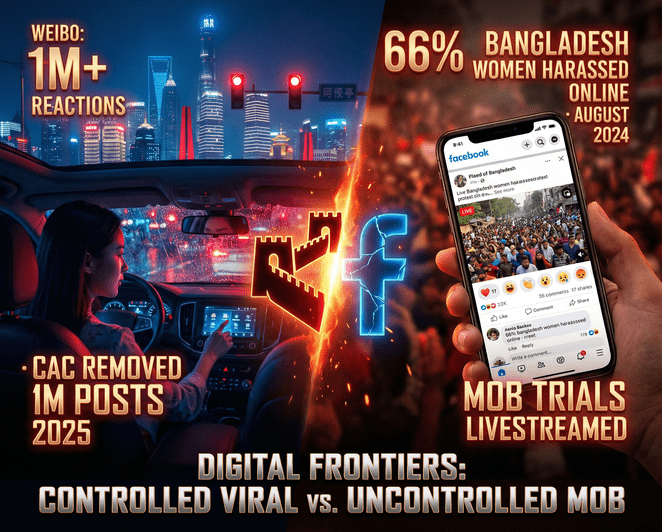
By March 2020, the Bangladeshi government was using the DSA systematically against journalists, activists, cartoonists, students, and doctors who had spoken critically about the pandemic response. Human Rights Watch documented the pattern directly: authorities arrested journalists, artists, students, doctors, political opposition members, and activists who spoke out against the government's response to the pandemic or criticized the ruling Awami League party. Between March and early May 2020, the Atlantic Council's documentation showed 42 cases filed under the DSA. Article 19 identified eleven instances where those arrested were whistleblowers — people who had raised concerns about actual pandemic conditions and government management of the crisis.
At least 20 journalists and 60 other people were detained under the DSA during 2020. Bangladesh's ranking in the Reporters Without Borders Press Freedom Index fell to 151 out of 180 countries in 2020 — one position lower than 2019. One editor, speaking to Human Rights Watch, said he was publishing only 10 to 20 percent of the stories at his disposal. The Editors Council called the situation a "nightmare-reality."
The Death of Mushtaq Ahmed
The most consequential single case was Mushtaq Ahmed. A writer and social media commentator, Ahmed was abducted from his Dhaka residence by officers of the Rapid Action Battalion (RAB) on May 4, 2020, and formally arrested two days later under Section 21 of the Digital Security Act for "spreading rumours and misinformation on Facebook about the coronavirus situation" and "undermining the image of the father of the nation." He was 53 years old. He had published an article criticizing the shortage of personal protective equipment for healthcare workers and had shared cartoons by Ahmed Kabir Kishore that depicted government corruption in the pandemic response.
Ahmed was denied bail six times over nine months. He was held in Kashimpur high-security jail in Gazipur district. On February 25, 2021, after nine months of pretrial detention — during which he was officially charged only in January 2021 — Mushtaq Ahmed died in custody. Authorities said he died of natural causes. His lawyers and family disputed this. Cartoonist Ahmed Kabir Kishore, arrested the same day on the same charges, told lawyers at a February 23 court hearing that he had been physically tortured by RAB officers while in detention and was suffering from untreated medical conditions.
The UN High Commissioner for Human Rights, Michelle Bachelet, called for a transparent independent inquiry into Ahmed's death within days. Bachelet called for the DSA to be overhauled and for all those detained under it for exercising freedom of expression to be released. Nine international human rights organizations released a joint statement. Three hundred students and activists marched in Dhaka. At least 35 protesters were injured and 7 arrested during the demonstrations. Cartoonist Kishore was eventually granted bail in March 2021 on health grounds, emerging from prison bearing marks that human rights organizations said were consistent with torture. No independent investigation into Mushtaq Ahmed's death has been completed. No one has been held accountable.
Rozina Islam and the Health Ministry Detainment
The case of investigative journalist Rozina Islam illustrated the same dynamic at a different level of visibility. Islam, a senior correspondent for Prothom Alo — Bangladesh's most-read national daily — had spent the pandemic period documenting corruption in the health sector. Her reports exposed a scheme in which candidates for government hospital positions were paying 1.5 to 2 million takas each to pass recruitment exams, with higher-scoring written candidates being outperformed in verbal tests by candidates who appeared to have purchased their results.
On May 17, 2021, Islam visited the Health Ministry to meet with an official. She was detained inside the building for five hours without an arrest warrant. When journalists from around Dhaka gathered outside to protest, she was handed over to police. The Health Ministry filed a case against her under the colonial-era Official Secrets Act, accusing her of espionage. Amnesty International's South Asia expert noted that the authorities had provided no concrete evidence of any recognizable criminal offense. The Committee to Protect Journalists issued a public letter in February 2023 calling on Bangladesh to cease harassment of Islam, which continued to be documented years after the original arrest.
The Pattern Across Borders
China and Bangladesh were not unique in their response to COVID-era dissent. Reporters Without Borders documented that a Venezuelan freelance journalist spent 12 days in prison for a tweet questioning official pandemic figures. An Indian reporter faced a possible six-month sentence for reporting that hungry children were being forced to eat cattle fodder during lockdown restrictions. A Malaysian journalist faced six years in prison for COVID Facebook posts. In Bangladesh, cartoonist Ahmed Kabir Kishore faced a possible life sentence for cartoons about pandemic-era corruption.
RSF's secretary-general stated at the time that some journalists had taken such significant risks to report on the pandemic's reality that they had died as a result, while others had disappeared or been jailed. The organization's 2020 analysis found a direct correlation between suppression of media freedom in response to the pandemic and a country's overall press freedom ranking: countries that already ranked low suppressed harder and faster, using COVID as a pretext to accelerate existing patterns of control.
What the Silence Cost
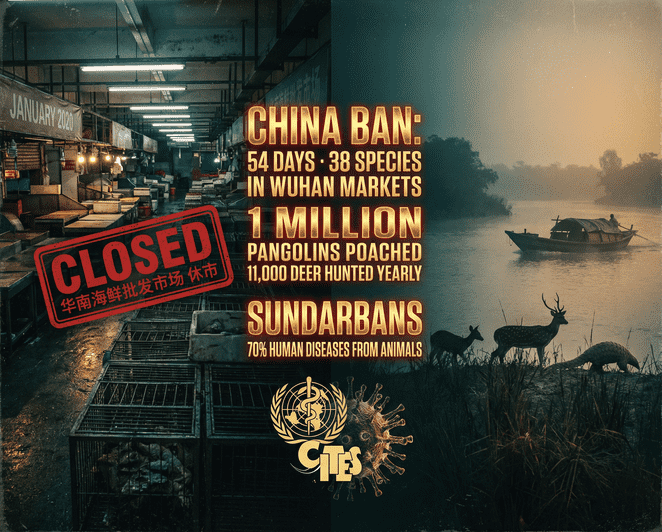
The cost of silencing Dr. Li Wenliang is difficult to quantify precisely and impossible to attribute cleanly. But the Chinese Supreme Court's own statement — that it would have been fortunate if the public had believed the early warnings and started wearing masks and avoiding the wildlife market — implies a direct chain of causation. The eight Wuhan doctors who were publicly punished in the first week of January 2020 were reprimanded during the period when early containment was theoretically still possible. The Wuhan lockdown was not announced until January 23. By then, an estimated 5 million people had already left Wuhan for Lunar New Year travel.
Researchers who have studied pandemic preparedness point to the Wuhan suppression as a case study in how institutional incentives to silence unwelcome information can override the public health imperative to act on it. The doctors were not suppressed because the authorities knew the information was wrong. They were suppressed because the information was inconvenient — potentially embarrassing to city officials in the run-up to a major political meeting. The inconvenience of truth, not its falsity, was what the system punished.
In Bangladesh, the cost of silencing pandemic-era reporters is also indirect but traceable. Human Rights Watch documented that health workers reported insufficient personal protective equipment — the same shortage that Mushtaq Ahmed had written about before his arrest. The government's response to those shortages was to silence the reporters covering them, not to address the shortages themselves. An editor publishing 10 to 20 percent of available stories is an editor whose readers are not receiving the information they need to make decisions about their own safety.
After the Pandemic: What Changed
In China, Dr. Li Wenliang's legacy has become complex. He was officially canonized as a martyr. His Weibo profile remains active, with millions of posts from people who continue to leave messages for him. The censorship apparatus that punished him continues to function. The officials responsible for the initial reprimands were disciplined — the two Wuhan police officers who forced him to sign the letter — but the system that authorized their action was not reformed. The Zero-COVID policy that extended the pandemic's toll on Chinese citizens for three years was built on the same infrastructure of information control that silenced Li in December 2019.
In Bangladesh, the Digital Security Act was formally replaced by the Cyber Security Act in 2023 under the Hasina government. Critics, including international human rights organizations, argued that the new law retained provisions that could be used against legitimate speech in ways similar to the DSA. After Hasina's resignation in August 2024, the interim government under Muhammad Yunus pledged press freedom reforms. As of early 2026, systematic documentation of those reforms — and of whether the structural conditions that produced the DSA crackdown have changed — is still ongoing.
What has changed definitively is the international documentation. The pandemic produced an unusually comprehensive public record of how states suppress inconvenient public health information — with names, dates, charges, and outcomes documented by governments, UN agencies, and press freedom organizations in real time. That record exists. Whether it produces institutional reform is a separate question, and one whose answer will matter enormously for the next outbreak.
win-tk.org is a wintk publication covering global affairs and culture for Bangladeshi and South Asian audiences.