Pahela Baishakh 2026: Bangladesh Welcomes Bangla New Year 1433 on April 14
Pahela Baishakh 2026 — the first day of the Bangla New Year 1433 — falls on Tuesday, April 14, 2026 in Bangladesh. The day is a national public holiday and the country's largest secular cultural festival, celebrated by people of all faiths and backgrounds across every district. Celebrations begin before dawn at Ramna Batamul in Dhaka with Chhayanaut's annual musical programme, followed by the Anando Shobhajatra procession from Dhaka University's Faculty of Fine Arts. This year carries an additional national milestone: Prime Minister Tarique Rahman has chosen April 14 to formally launch the Farmer Card (Krishak Card) programme — distributing it on a pilot basis across 11 upazilas simultaneously, starting from Tangail Sadar.
What Is Pahela Baishakh and Why Does It Matter?
Pahela Baishakh (পহেলা বৈশাখ) literally means "the first day of Boishakh" — the first month of the Bengali calendar. The festival traces its origins to Emperor Akbar's proclamation of tax collection reforms during the Mughal era, when a solar Bengali calendar was introduced to align with agricultural cycles. Over centuries it evolved from a commercial event — the opening of Halkhata (new account books) by traders — into Bangladesh's most inclusive and widely observed cultural festival.
In Bangladesh, Pahela Baishakh falls on April 14 every year by law, fixed according to the Bangladesh Bengali calendar introduced in 1987. In the Indian states of West Bengal, Tripura, and Assam, it falls on April 15 (or 14 in leap years) because those states follow a different astronomical calculation. The traditional Bengali greeting is শুভ নববর্ষ — Shubho Noboborsho (Happy New Year).
According to UNESCO's Intangible Cultural Heritage record, the Mangal Shobhajatra — the procession that is now the centrepiece of Pahela Baishakh in Dhaka — was inscribed on UNESCO's Representative List of Intangible Cultural Heritage of Humanity in 2016. It is one of only a handful of Bangladeshi traditions to hold this designation.
The 2026 Theme: "Harmony of the New Year, Resurgence of Democracy"
Each year, Dhaka University's Faculty of Fine Arts sets a theme for the Anando Shobhajatra (formerly known as Mangal Shobhajatra). According to The Daily Star, the theme for 2026's Bangla New Year 1433 is: "Noboborsher Oikotan, Gonotontrer Punorutthan" — "Harmony of the New Year, Resurgence of Democracy."
The theme reflects Bangladesh's political moment: the country held its first free general election in a decade in February 2026, following the July 2024 uprising that ended Sheikh Hasina's government and the subsequent interim period under Muhammad Yunus. Pahela Baishakh 1433 is the first celebration under the newly elected government of Prime Minister Tarique Rahman — and the theme explicitly connects cultural renewal with democratic renewal.
The procession will begin at 9:00am from the Faculty of Fine Arts, moving through Raju Sculpture, Doel Chattar, and Bangla Academy before returning to the Faculty premises. Dhaka University has issued specific security rules for 2026: wearing masks or carrying bags inside the campus will not be permitted, though handmade masks created by the Fine Arts faculty may be displayed by hand. Vuvuzelas are banned. All programmes must conclude by 5:00pm, after which campus entry will be restricted.
Complete Programme Schedule: What Happens on April 14
TimeProgrammeLocation Dawn (before sunrise)Chhayanaut musical programme — "Esho He Boishakh" (Tagore song), raga-based classical performanceRamna Batamul (under the banyan tree), Ramna Park, Dhaka Morning (approx. 9:00am)Anando Shobhajatra procession — Faculty of Fine Arts, Dhaka University (DU)From Charukola, DU → through Raju Sculpture → Doel Chattar → Bangla Academy → return MorningPM Tarique Rahman inaugurates Farmer Card programmeTangail Sadar upazila + 11 upazilas simultaneously across the country All dayBaishakhi fairs, cultural programmes, folk performancesRamna Park, Suhrawardy Udyan, Hatirjheel, Rabindra Sarobar, Dhanmondi; all districts and upazilas nationwide All dayBangladesh Shilpakala Academy cultural eventsCentral and regional levels All dayFree museum entry for children, students, disabled personsAll national museums AfternoonSammilita Sangskritik Jote afternoon programmeShaheed Minar premises By 5:00pmAll DU campus programmes concludeCampus entry restricted after 5pmThe Chhayanaut Dawn Concert at Ramna Batamul
The Chhayanaut musical programme at Ramna Batamul has been the traditional opening of Pahela Baishakh since 1967 — predating the Mangal Shobhajatra by more than two decades. The cultural organisation begins its performance under the historic banyan tree at the moment dawn breaks, opening with Rabindranath Tagore's "Esho He Boishakh" and continuing with raga-based classical performances, Rabindra Sangeet, and poetry recitals.
The significance of the Chhayanaut programme goes beyond music. In 2001, the concert was targeted in a deadly bomb attack by Islamist militants — an event that remains part of the institutional memory of Pahela Baishakh and one reason security deployments at Ramna remain substantial every year. The programme typically involves over 100 artists and runs for several hours through the early morning.
The Anando Shobhajatra: Bangladesh's UNESCO-Recognised Procession
The Anando Shobhajatra (also called Barshabaran Ananda Shobhajatra) began in 1989 when students of Dhaka University's Faculty of Fine Arts used the procession to express collective hope during the period of military rule. The original name Mangal Shobhajatra — meaning "auspicious procession" — was used until recently, when the university adopted the current name to emphasise joy and celebration.
The procession is assembled over weeks of preparation by faculty teachers and students. Giant papier-mâché masks, towering animal floats, and colourful structures representing Bengali folk culture — typically including at least one figure representing evil forces to be overcome, one representing courage and strength, and one representing peace — are carried through the streets. The tradition represents Bangladesh's secular identity and its people's assertion of cultural continuity against attempts to suppress or diminish it.
The UNESCO inscription describes the procession as a way for Bangladeshis to "promote peace and overcome evil forces" and as an expression of unity across social divisions. At divisional, district, and upazila levels across the country, parallel processions are held — meaning April 14 sees thousands of Anando Shobhajatra events simultaneously nationwide.
Food and Traditions: Panta Bhat, Hilsa, and the Halkhata
Food is inseparable from Pahela Baishakh. The traditional Baishakhi breakfast — now a nationwide institution regardless of class background — is panta bhat: fermented rice soaked overnight in water, served with mustard oil, green chilli, onion, and fried fish. In Dhaka, panta bhat stalls appear by the hundreds in Ramna Park, Suhrawardy Udyan, and across the university campus. The meal that was once exclusively a rural necessity has become a deliberate cultural statement — a connection to agricultural roots that urban Bangladeshis maintain through the festival.
Hilsa fish (ilish) is the other Baishakhi food icon — the national fish of Bangladesh, prepared in multiple forms on the New Year and considered essential to a proper celebration. The pairing of panta bhat and hilsa is often cited as the defining culinary image of April 14 in Bangladesh.
The Halkhata tradition — the opening of new account ledgers by traders and shopkeepers, with sweets offered to customers — continues in markets across Bangladesh. It represents a commercial new year: debts of the previous year are symbolically set aside, and new relationships between buyers and sellers are initiated. In an era of digital payments, the tradition persists in spirit even as physical ledgers give way to accounting software.
The 2026 Farmer Card Launch: A Political Baishakh
Pahela Baishakh 1433 carries an additional political dimension specific to 2026. According to Dhaka Tribune, PM Tarique Rahman will formally inaugurate the Farmer Card (Krishak Card) distribution programme on April 14 — launching the pilot simultaneously in 11 upazilas, starting from Tangail Sadar. In the first phase, financial assistance will be disbursed to 21,500 farmers through mobile banking services.
The press secretary described the Farmer Card as "not just a card" but "a symbol of the rightful entitlements, dignity and security of every farmer." The programme will be expanded to all upazilas within four years following the piloting stage. The government's choice to launch the programme on Pahela Baishakh — a harvest-rooted festival with deep agricultural symbolism — is deliberate: it connects a BNP electoral promise to a cultural moment that resonates specifically with Bangladesh's rural majority.
For context on the BNP government's first months in power and the wider set of policies it has committed to, WinTK's coverage of Tarique Rahman's first 100 days and BNP government policy provides the broader picture. And for background on the February 12 election that brought the current government to power, see our analysis of the BNP's landslide victory and the 127 million voter election.
Pahela Baishakh Across Bangladesh: Beyond Dhaka
While the Dhaka events draw the largest crowds, Pahela Baishakh is a nationwide festival. In Chittagong, Mangal Shobhajatra processions are held from Chittagong University, followed by daylong cultural activities at DC Hill and CRB. The Shammilito Pohela Boishakh Udjapon Parishad holds a two-day function at the hill premises. In Sylhet, Rajshahi, Khulna, and every district headquarters, local administrations organise Baishakhi fairs, cultural performances, and rallies.
In the Chittagong Hill Tracts, Pahela Baishakh coincides with the indigenous water festivals: the Chakma celebrate Bizu, the Marma celebrate Sangrai, and the Tripuri celebrate Baisuk — all during the same period. The 2025 government under the interim administration made a notable effort to integrate these indigenous celebrations into the national Pahela Baishakh framework for the first time. In 2026, under the new elected government, preparations at Dhaka University began in late March with the DU Pro-Vice Chancellor personally inaugurating the preparatory activities.
Getting to Pahela Baishakh Events in Dhaka
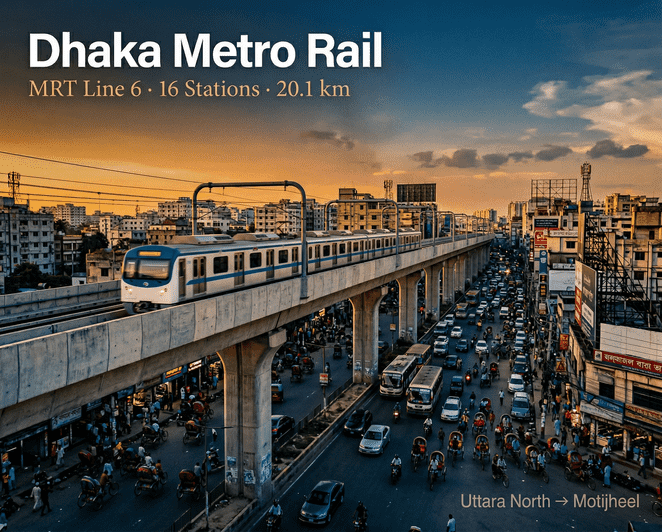
The concentration of April 14 programmes in Dhaka's Ramna-Shahbagh-TSC corridor means traffic and crowd management are significant considerations. The Dhaka Metro Rail (MRT Line 6) runs through Shahbagh — the station immediately adjacent to the University of Dhaka campus and Ramna Park — making it the most practical way to reach the central celebration venues without contributing to road congestion. For a complete guide to metro stations, routes, and fares relevant to April 14 venues, see our Dhaka Metro Rail MRT Line 6 guide for 2026.
The DU campus will be accessible until 5:00pm, after which entry is restricted. Ramna Park and Suhrawardy Udyan events run through the day. Law enforcement agencies will be deployed in force at all major venues — the security posture for Pahela Baishakh is always substantial given the 2001 bombing history. All outdoor programmes at major venues in Dhaka are expected to conclude by 5:00pm–6:00pm.
Pahela Baishakh 1433 arrives at a moment of genuine national optimism in Bangladesh — the first such celebration after a democratic election that commanded over 59% voter turnout across 127 million eligible voters. The festival's 2026 theme, "Harmony of the New Year, Resurgence of Democracy," captures that convergence precisely. শুভ নববর্ষ ১৪৩৩। Shubho Noboborsho 1433.
Frequently Asked Questions
When is Pahela Baishakh 2026 in Bangladesh?
Pahela Baishakh 2026 falls on Tuesday, April 14, 2026 — the first day of Bangla New Year 1433. It is a national public holiday in Bangladesh. In West Bengal, India, the Bengali New Year falls on April 15, 2026.
What is the Mangal Shobhajatra / Anando Shobhajatra?
It is a colourful procession organised by the Faculty of Fine Arts, University of Dhaka, held on the morning of Pahela Baishakh since 1989. It was declared UNESCO Intangible Cultural Heritage of Humanity in 2016. The 2026 theme is "Harmony of the New Year, Resurgence of Democracy."
What is traditional Pahela Baishakh food?
The classic Baishakhi breakfast is panta bhat — fermented rice soaked overnight in water — served with green chilli, onion, mustard oil, and fried fish. Hilsa (ilish) is the festival's most iconic food. Both are served at homes, parks, and fairs across Bangladesh on April 14.
What is the Farmer Card being launched on April 14?
PM Tarique Rahman will formally launch the Krishak Card (Farmer Card) programme on Pahela Baishakh — distributing it on a pilot basis in 11 upazilas simultaneously, starting from Tangail Sadar, with financial assistance to 21,500 farmers via mobile banking. The programme will expand to all upazilas within four years.
What is the traditional greeting for Pahela Baishakh?
The traditional greeting is "শুভ নববর্ষ" — pronounced "Shubho Noboborsho" — which means "Happy New Year." It is used across all communities regardless of religion or background as the universal Pahela Baishakh greeting.