April 2026: The Week South Asia Changed
The first week of April 2026 has produced a compression of geopolitical events that would be remarkable in any month — but is extraordinary for their simultaneous arrival. On April 7, the United States and Iran agreed to a Pakistan-brokered two-week ceasefire, stepping back from the brink of a civilisational war hours before Trump's self-imposed deadline expired. On April 7–8, Bangladesh's Foreign Minister Khalilur Rahman arrived in New Delhi for the first ministerial visit since the BNP government came to power — a meeting carrying the weight of a year of diplomatic tension, a suspended tourist visa crisis, and the need for both countries to establish a working relationship under genuinely new political conditions. Pakistan's Defence Minister Khawaja Asif, speaking in Sialkot on April 4, threatened that any future conflict with India would extend to Kolkata — a statement that simultaneously became the central controversy of West Bengal's assembly election campaign, a national security concern in New Delhi, and a complication for Pakistan's simultaneous diplomatic triumph as the ceasefire broker. And gold prices in Bangladesh, with Hajj season beginning on April 18 and the West Asia conflict disrupting commodity markets globally, have surged to levels that directly affect millions of ordinary Bangladeshi households. This is the South Asia crisis roundup for April 2026. For comprehensive South Asia coverage, visit WINTK.
Crisis 1 — The Iran-US Ceasefire: How Pakistan Stopped a War
The single most consequential diplomatic event in South Asia in April 2026 — and arguably the world — happened on the evening of April 7. With less than two hours remaining before a deadline that US President Donald Trump had set for Iran to reopen the Strait of Hormuz or face strikes he described as the destruction of a "whole civilization," Trump announced on Truth Social that he had agreed to a two-week ceasefire with Iran. The ceasefire came because of Pakistan.
The sequence of events: Pakistani Prime Minister Shehbaz Sharif and Army Chief General Asim Munir contacted Trump and proposed a two-week ceasefire framework. Sharif publicly posted on X, requesting Iran to reopen the Strait for two weeks as a goodwill gesture and asking Trump to extend his deadline to allow diplomacy to proceed. Iran's Supreme National Security Council, citing its 10-point proposal, agreed. "This will be a double sided CEASEFIRE!" Trump wrote on Truth Social, crediting conversations with Sharif and Munir for his decision. Iranian Foreign Minister Seyed Abbas Araghchi thanked Pakistan's prime minister for his role, and confirmed Iran would allow "safe passage through the Strait of Hormuz via coordination with Iran's Armed Forces" for the two-week period. CNN reported that Vice President JD Vance called the deal a "fragile truce" in remarks from Budapest, noting divisions within Iran's leadership about how to proceed.
The ceasefire's terms: the US and Israel suspend strikes on Iran for two weeks; Iran reopens the Strait of Hormuz for "safe passage" under coordination with Iranian armed forces; both sides use the period to negotiate what Trump described as a "definitive Agreement concerning Longterm PEACE." Iran's 10-point proposal — not fully published — includes lifting all sanctions, releasing Iranian frozen assets abroad, withdrawing US combat forces from regional bases, and Iran's right to nuclear enrichment. Trump called it "a workable basis on which to negotiate." Israel said the ceasefire does not include Lebanon. PM Sharif invited both US and Iranian delegations to Islamabad for April 10 talks. Pakistan described its role as that of an honest broker for both sides — and its diplomatic success has given PM Sharif's government a significant international standing at a moment when Pakistan's own domestic economy remains severely stressed by the energy shock the war produced. Oil prices fell 13–16% on ceasefire news, providing immediate relief to South Asia's energy-importing economies including Bangladesh. For the full analysis of how the West Asia conflict and oil price shock has affected Bangladesh's economy, see our global oil crisis and Bangladesh economy analysis. For the India lockdown panic that the West Asia energy crisis also triggered, see our India lockdown 2026 fact-check. For the complete Pakistan-Iran ceasefire analysis, see our dedicated Iran-US ceasefire cluster article.
Crisis 2 — Bangladesh-India Diplomacy: The First Ministerial Reset
Bangladesh's Foreign Minister Dr Khalilur Rahman arrived in New Delhi on April 7 for a two-day visit — the first trip to India by a Bangladeshi minister since the BNP-led government came to power following the February 12, 2026 general election. The visit marks a structural inflection point in Bangladesh-India relations that had been effectively frozen since August 2024, when Sheikh Hasina fled to India following the Monsoon Revolution.
The agenda was comprehensive. Rahman held bilateral talks with External Affairs Minister S. Jaishankar — a meeting described by Indian officials as laying the groundwork for a subsequent visit by Prime Minister Tarique Rahman to New Delhi. He also met National Security Adviser Ajit Doval and Petroleum and Natural Gas Minister Hardeep Singh Puri. The Doval meeting focused on security cooperation: counter-terrorism, border management, intelligence sharing, and the India-Bangladesh framework for stopping illegal infiltration — an issue that has been a flashpoint in both domestic politics and bilateral diplomacy.
The most immediately emotive issue for ordinary Bangladeshis was the tourist visa suspension. India suspended tourist visa issuance for Bangladeshi nationals in July 2024, citing security concerns — a decision that effectively severed regular travel for medical tourism, religious pilgrimages, business visits, and family reunions across what had been one of the region's most active travel corridors. Diplomatic sources confirmed that Dhaka formally requested a timeline for lifting the suspension and pressed for phased restoration of the multiple-entry categories most important to Bangladeshi travellers — particularly those seeking medical treatment in Kolkata, Chennai, and Bengaluru. Indian officials linked any resumption to new biometric enrolment capacity at understaffed visa centres in Dhaka, Chittagong, and Sylhet.
Beyond the visa question, the meeting addressed the Teesta water-sharing accord (long unresolved), cross-border power infrastructure, land-port modernisation, Bay of Bengal energy transit security (directly relevant given the West Asia conflict's disruption of Persian Gulf routes), and — critically — the question of Sheikh Hasina's extradition, which India has not publicly addressed despite Bangladesh's formal request. The meeting was described by Humayun Kabir, foreign affairs adviser to PM Tarique Rahman, as representing "the potential of a new phase in the bilateral relationship." India's High Commissioner Pranay Verma had met PM Tarique Rahman in Dhaka on April 6 — the day before the ministerial visit — with New Delhi conveying "intent to work together with the Government and people of Bangladesh by adopting a positive, constructive and forward-looking approach." For the detailed analysis of the Bangladesh-India visa crisis and the Jaishankar-Rahman meeting, see our Bangladesh-India visa crisis cluster article. For context on the BNP government's first hundred days and diplomatic posture, see our Tarique Rahman first 100 days analysis.
Crisis 3 — Khawaja Asif's Kolkata Threat and the West Bengal Election Flashpoint
On April 4, Pakistan's Defence Minister Khawaja Asif made remarks in Sialkot that simultaneously inflamed India-Pakistan tensions, dominated West Bengal's election campaign, and complicated Pakistan's own diplomatic positioning as the ceasefire broker in the Iran-US war. Speaking to reporters, Asif warned: "If India tries to stage any false flag operation this time, then God-willingly, we will take it to Kolkata." He provided no evidence for any Indian "false flag" planning. The remarks drew immediate and intense reaction across India.
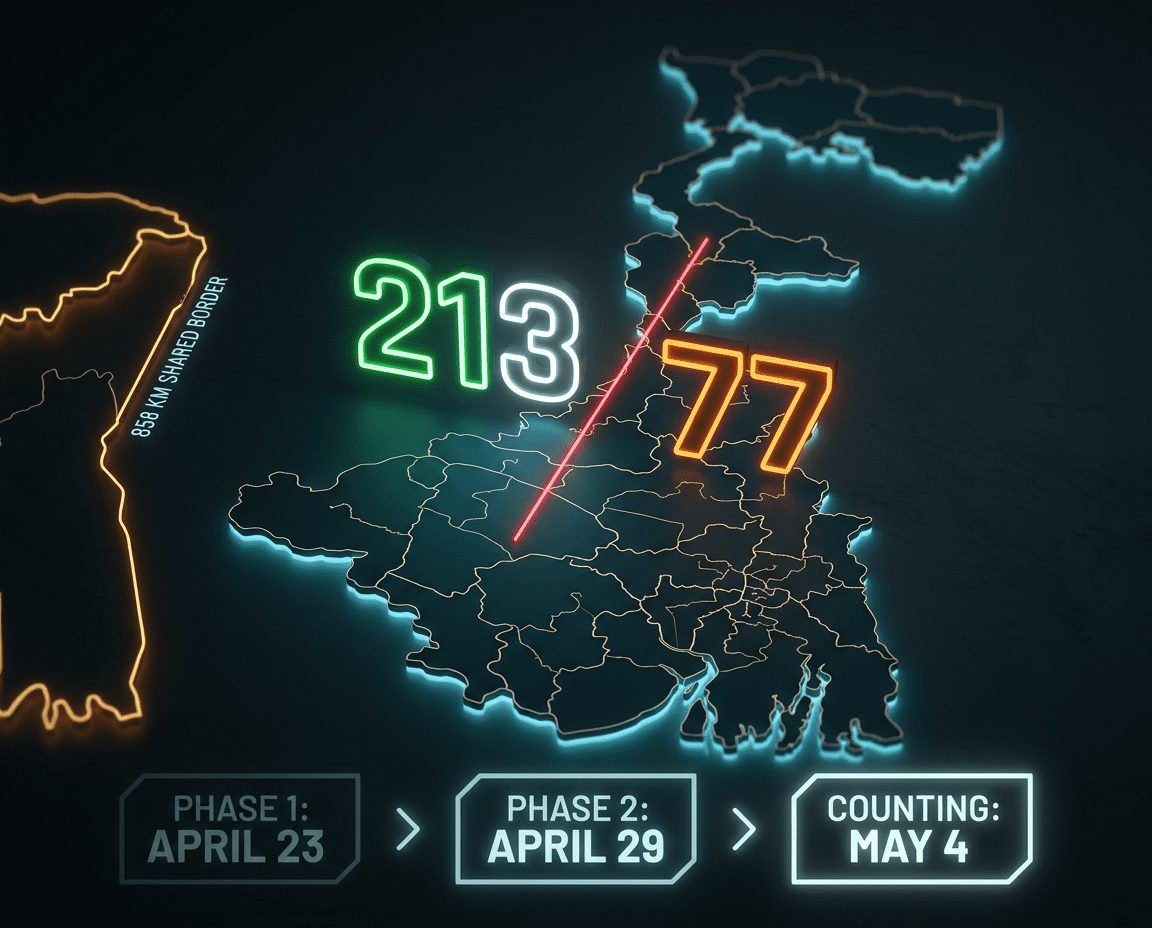
The political dimension in West Bengal was immediate and significant. West Bengal's assembly elections are scheduled for two phases — April 23 and April 29, with counting on May 4. The election is a fierce contest between the ruling Trinamool Congress (TMC) under Chief Minister Mamata Banerjee and the BJP. Asif's Kolkata threat statement became, within 48 hours, a central battleground in the campaign. TMC General Secretary Abhishek Banerjee publicly criticised PM Modi, Home Minister Amit Shah, and Defence Minister Rajnath Singh for their "silence" on the Pakistani minister's remarks. Mamata Banerjee herself demanded PM Modi's resignation over what she described as his failure to respond to an external threat against Bengal's capital. BJP MP Nishikant Dubey responded by alleging the statement had been "scripted by TMC" as a diversionary tactic to shift focus from illegal infiltration in West Bengal — a claim he offered no evidence for. India's security agencies have confirmed they are closely monitoring the remarks, noting that Pakistan may be attempting to incite terror groups operating in Bangladesh — including HuJI and JMB — to carry out attacks in West Bengal and Assam ahead of both sets of elections.
The Kolkata threat and its electoral consequences are also directly relevant to Bangladesh. Indian intelligence officials have stated that Pakistan is working to embed terror groups in Bangladesh as a vector for attacks on West Bengal and India's northeastern states. The context of dramatically improving Bangladesh-India security cooperation — as established at the Khalilur Rahman-Jaishankar and Rahman-Doval meetings this week — is therefore directly connected to managing this threat. Bangladesh's cooperation in counter-terrorism and border management is now framed explicitly by Indian officials as part of regional security for the West Bengal election period. For the detailed Pakistan-Kolkata threat and India tensions analysis, see our Pakistan Kolkata threat cluster article. For the West Bengal election context and its Bangladesh dimensions, see our West Bengal election 2026 guide.
Crisis 4 — Gold Prices in Bangladesh: What the West Asia Conflict Means for Everyday Households
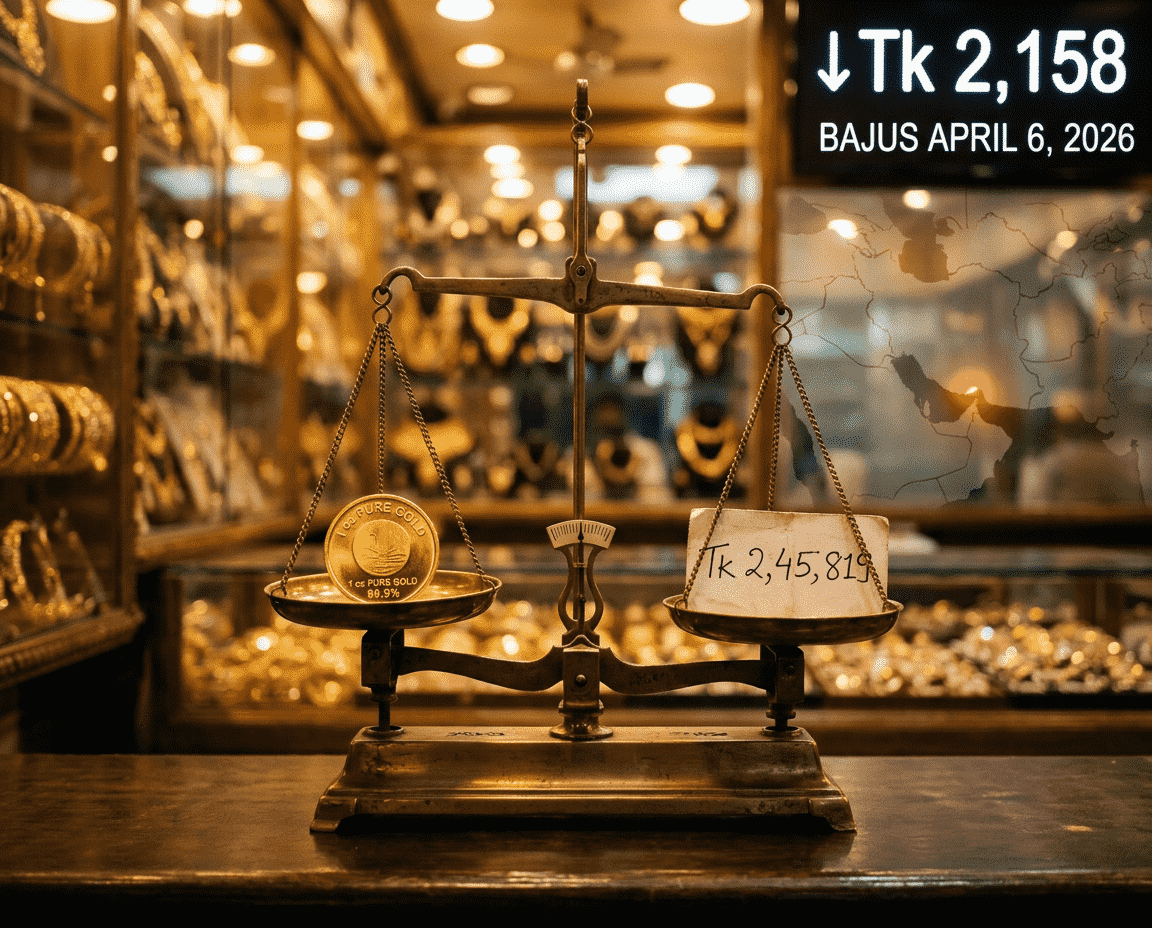
The West Asia conflict's most immediate economic effect on Bangladeshi households has been through energy prices — the fuel caps, university closures, and emergency diesel imports documented in early March. But as April 2026 arrives with Hajj season beginning April 18 and the global commodity markets still adjusting to the shock of the Iran war, gold prices have surged to record levels that directly affect millions of ordinary Bangladeshis.
Gold holds a structurally unique position in Bangladesh's household economy. It is simultaneously an investment vehicle, a savings store, a wedding and religious expenditure item, and increasingly an inflation hedge as the taka has come under pressure from energy import costs. BAJUS (Bangladesh Jewellers Association) sets daily gold rates that determine what Bangladeshis actually pay for gold at the retail level. The West Asia conflict's impact on gold has operated through multiple channels: safe-haven demand driving global gold prices upward, dollar strengthening as a crisis-period norm making gold more expensive for taka holders, and the disruption of Gulf gold trade routes that normally supply significant volumes of gold to the Bangladesh market via returning workers and direct imports. For the detailed BAJUS rates, forecasts, and household implications, see our Gold price Bangladesh April 2026 analysis.
The Bigger Picture: How These Four Crises Connect
The Iran-US ceasefire, Bangladesh-India diplomatic reset, Pakistan-India Kolkata flashpoint, and commodity price shock are not four separate stories in April 2026. They are four expressions of the same underlying geopolitical rupture that has reshaped South Asia's operating environment since February 28, when the US-Israel war on Iran began.
Pakistan occupies an extraordinary dual position in this moment: it is simultaneously the country that brokered the most important ceasefire of 2026, the country whose Defence Minister threatened to strike India's fourth-largest city, and the country whose energy economy is under the most severe domestic stress in the region, with diesel prices surging 54.9% in a single month. Bangladesh sits at the intersection of almost every thread: its economy is directly exposed to oil price shocks through near-total energy import dependence; its diplomatic relationship with India is being actively rebuilt at exactly the moment when India's relationship with Pakistan is at its most volatile since Operation Sindoor; its borders are a potential transit zone for terror groups that Pakistan may be attempting to activate against West Bengal's election; and its Hajj pilgrims, its remittance workers in the Gulf, and its gold-buying households are all directly affected by the West Asia conflict's commodity market consequences.
For the Bangladesh election context and how the new BNP government is navigating all these simultaneous pressures, see our Bangladesh election 2026 analysis and our Bangladesh GDP forecast 2026 report. For PM Tarique Rahman's policy approach in his first hundred days, see our first 100 days analysis.
South Asia Crisis April 2026 — Quick Reference Table
CrisisKey DevelopmentBangladesh Relevance Iran-US CeasefirePakistan brokered 2-week deal April 7; Strait of Hormuz to reopen; Islamabad talks April 10Oil prices fell 13-16% on ceasefire news; direct relief to Bangladesh energy import costs Bangladesh-India ResetFM Khalilur Rahman in New Delhi April 7-9; Jaishankar + Doval meetings; visa suspension on agendaFirst ministerial visit since BNP took power; tourist visa suspension, security cooperation, energy transit Kolkata Threat / India-PakistanPakistan Def Min Asif threatened Kolkata strike April 4; West Bengal election flashpointIndia-Bangladesh security cooperation directly linked to countering terror groups Pakistan may activate in region Gold / Commodity PricesGlobal gold at record highs from West Asia safe-haven demand and disrupted supply chainsBAJUS gold rates at record highs; Hajj season April 18 increases gold demand further West Bengal Election2 phases April 23 + April 29; TMC vs BJP in 294 seats; counting May 4Election outcome shapes India's Northeast security posture and Bangladesh border policyFrequently Asked Questions
What happened with Iran and the US ceasefire in April 2026?
On April 7, 2026, the US and Iran agreed to a Pakistan-brokered two-week ceasefire, hours before Trump's deadline for strikes that he threatened would destroy Iran's "whole civilization." Pakistani PM Shehbaz Sharif and Army Chief Asim Munir proposed the framework. Iran agreed to allow safe passage through the Strait of Hormuz during the two weeks. US and Iranian delegations were invited to Islamabad for April 10 talks. Oil prices fell 13–16% on the announcement.
What was Bangladesh Foreign Minister Khalilur Rahman's visit to India about?
FM Khalilur Rahman visited New Delhi April 7–9, 2026 — the first ministerial visit since the BNP government took power in February. He met External Affairs Minister Jaishankar and NSA Doval. Key agenda items: the tourist visa suspension (imposed July 2024), counter-terrorism cooperation, border security, Bay of Bengal energy transit security, and the Teesta water-sharing accord. The visit was described as groundwork for a subsequent PM Tarique Rahman visit to New Delhi.
What did Pakistan's Khawaja Asif say about Kolkata?
On April 4, 2026, Pakistan Defence Minister Khawaja Asif told reporters in Sialkot that if India attempted any "false flag operation," Pakistan would respond with strikes extending to Kolkata. He provided no evidence for any Indian false-flag planning. The statement became a major controversy in West Bengal's assembly election campaign and was condemned by both TMC and BJP leaders on different grounds. Indian security agencies stated they were closely monitoring the remarks and potential terror group activation in the region.
When are the West Bengal elections in 2026?
West Bengal's assembly elections are held in two phases: April 23 and April 29, 2026. Vote counting is scheduled for May 4. The 294-seat assembly contest is primarily between TMC (ruling, under Mamata Banerjee) and BJP. In the 2021 election, TMC won 213 seats and BJP won 77. The Kolkata threat statement by Pakistan's defence minister has become an unexpected campaign issue.
How does the West Asia crisis affect Bangladesh in April 2026?
Bangladesh is affected through multiple channels: energy prices (95% import dependence), gold prices (surged to record levels from safe-haven demand and supply disruption), remittance from Gulf workers (under pressure from conflict-zone departures), and geopolitical positioning (Bangladesh-India security cooperation is directly linked to counter-terrorism efforts ahead of West Bengal elections). The Iran-US ceasefire's opening of the Strait of Hormuz provides some relief, but the two-week nature of the deal means uncertainty remains.