Bangladesh's Top Universities in 2026: What the Rankings Actually Say
Every year after the HSC results come out, millions of Bangladeshi students and their families face the same question: which university, and how to get in. The answer is more complicated than any single ranking can capture. Bangladesh has 109 accredited universities — public and private — operating across the country, and the gap between the best and the rest is significant. Choosing the right one depends on subject, budget, location, and what you intend to do with the degree.
This guide covers the top universities in Bangladesh according to the QS World University Rankings 2026, what each institution is known for, how to apply, and what it actually costs. This is a WinTK Official publication.
HSC Result 2026 Bangladesh: Date, How to Check, GPA Guide
The QS World University Rankings 2026: Bangladesh's Position
The QS World University Rankings 2026, released in June 2025, included 14 Bangladeshi universities in its global list of over 1,500 institutions. The rankings use eight key indicators: academic reputation, employer reputation, faculty-to-student ratio, citations per faculty, international faculty ratio, international student ratio, sustainability, and employment outcomes.
The top performers from Bangladesh in the QS World Rankings 2026 are as follows. University of Dhaka (DU) ranked 584th globally — the highest position of any Bangladeshi university. Bangladesh University of Engineering and Technology (BUET) placed in the 761–770 bracket. North South University (NSU) was placed in the 951–1000 bracket. Daffodil International University followed in the 1001–1200 bracket. BRAC University, Islamic University of Technology (IUT), Jahangirnagar University, and University of Rajshahi were all placed in the 1201–1400 bracket. American International University-Bangladesh (AIUB), Chittagong University of Engineering and Technology (CUET), East West University, Independent University Bangladesh (IUB), Khulna University, Khulna University of Engineering and Technology (KUET), and University of Rajshahi also appeared in the global rankings.
In the QS Asia University Rankings 2026, a broader list of 46 Bangladeshi institutions appeared. NSU topped all Bangladeshi universities in Asia at 149th, followed by Daffodil International University at 221st and BRAC University at 260th. East West University placed at 491st in Asia, with Ahsanullah University of Science and Technology at 518th.
University of Dhaka — Bangladesh's Top-Ranked Institution
The University of Dhaka, established in 1921, is Bangladesh's oldest and most prestigious public university. Known informally as the "Oxford of the East," it holds the top QS ranking among all Bangladeshi institutions at 584th globally in 2026. DU offers programmes across arts, sciences, business, law, engineering, and the fine arts, spread across its campus in central Dhaka.
The DU admission process for the 2025–26 academic session ran from October 29 to November 16, 2025, with tests across eight divisional cities. The Science Unit test was held on December 20, the Business Studies Unit on December 6, and the Arts, Law and Social Science Unit on December 13. The IBA (Institute of Business Administration) unit test was held November 28. The application fee is BDT 1,050 per unit. Students who pass the admission test and are selected begin in-person admission procedures from late March 2026.
Eligibility for DU requires passing SSC between 2020 and 2023 and HSC in 2025, with a combined SSC and HSC GPA of at least 8.0 (without the fourth subject) and a minimum GPA of 3.5 in each. For IBA, the minimum is GPA 4.0 in both SSC and HSC. As a public university, tuition at DU is heavily subsidised — annual tuition for most programmes runs BDT 5,000–15,000, making it among the most affordable higher education options in the country.
BUET — Engineering and Technology's Gold Standard
The Bangladesh University of Engineering and Technology has been the destination of choice for science students with engineering ambitions since its founding in 1876 (initially as Dhaka Survey School, renamed BUET after independence). In the QS World Rankings 2026, BUET sits in the 761–770 bracket globally. In subject-specific rankings, BUET is noted as the strongest Bangladeshi institution for mathematics.
BUET's admission for the 2025–26 session opened online applications on November 16, 2025, closing December 2. The admission test was held on January 10, 2026. Unlike many universities, BUET eliminated its preliminary selection test for the 2026 cycle, moving directly to the written examination. BUET allows calculators in its admission test — a distinction from most other Bangladeshi universities. Eligibility requires GPA 5.00 in both SSC (with 5.00 in maths, physics, and chemistry) and HSC. Second attempts at the BUET admission test are not permitted.
As a public university, BUET's tuition is nominal — among the lowest in the country. The institution charges a semester fee rather than a large annual tuition, with annual costs well under BDT 20,000 for most programmes. The trade-off is one of the most selective admission processes in Bangladesh: the combined pass rate across all eligible applicants is extremely low.
North South University — Leading Private University
North South University, founded in 1992 as Bangladesh's first private university, tops all Bangladeshi institutions in the QS Asia Rankings 2026 at 149th — ahead of DU and BUET in the regional comparison. Globally, NSU placed in the QS 951–1000 bracket. In subject-specific rankings, NSU is cited as the strongest Bangladeshi university for engineering research output.
NSU operates three semesters per year — Spring, Summer, and Fall — and admission applications are accepted on a rolling basis aligned with each semester. The university offers programmes in business, engineering, life sciences, humanities, and law. All instruction is in English. NSU's tuition is credit-hour based: undergraduate students pay per credit, with a full semester load (15 credits) costing approximately BDT 55,000–75,000 depending on the programme. A complete four-year undergraduate degree at NSU typically costs between BDT 7 lakh and BDT 12 lakh in tuition alone, making it a significant private investment.
NSU's employer reputation score in the QS rankings reflects genuine graduate outcomes — its business and engineering graduates are consistently sought by domestic and multinational employers operating in Bangladesh.
Bangladesh Megaprojects 2026: Padma Bridge, Metro Rail, and What's Next
BRAC University — Private Sector Research Leader
BRAC University, established in 2001 under the BRAC development organisation, placed in the QS World Rankings 1201–1400 bracket globally and 260th in QS Asia 2026. It is regarded as one of the most research-active private universities in Bangladesh, with a particular strength in development studies, public health, and computer science.
BRACU accepts applications for undergraduate programmes across Spring, Summer, and Fall intakes. The admission application fee is BDT 1,500. Tuition for domestic students runs approximately BDT 879 USD equivalent per year (roughly BDT 96,000–105,000 at current rates), varying by programme. For international students, the minimum is approximately USD 1,758 per year. BRACU offers financial aid and merit scholarships that can significantly reduce the cost for qualifying students.
BRAC University's approach to liberal arts education, its English-medium instruction, and its institutional connection to one of the world's largest development NGOs give it a distinctive profile that differs from other private universities in Bangladesh.
Daffodil International University — Rising Private Institution
Daffodil International University placed in the QS World Rankings 1001–1200 bracket and 221st in QS Asia 2026 — a remarkable position for a private university established in 2002. DIU has invested heavily in infrastructure, including a dedicated permanent campus in Ashulia, and has built particular strength in IT, business, and technical programmes.
DIU offers one of the more accessible tuition structures among Bangladesh's ranked private universities, with credit-based fees that are generally lower than NSU or BRAC University. It accepts applications on a rolling semester basis and has a significantly larger student body than most comparable institutions.
Other Notable Institutions
Jahangirnagar University (JU) placed in the QS World 1201–1400 bracket and is noted in subject rankings as Bangladesh's strongest institution for computer science research. Located in Savar, about 30 kilometres from Dhaka, JU is a fully residential public university — one of the few in Bangladesh — which gives it a distinct campus culture. Admission follows a competitive test structure similar to DU.
University of Rajshahi placed in the QS 1201–1400 bracket and is the premier university for students in the northwest of the country. It covers a wide range of disciplines and offers some of the most affordable public university education outside Dhaka. Its admission test for the 2025–26 session ran from November 20 to December 6, with unit tests in January 2026.
Islamic University of Technology (IUT) placed in the QS 1201–1400 bracket and is notable as an international university under the Organisation of Islamic Cooperation (OIC). It primarily serves students from OIC member countries and offers engineering, technology, and vocational education programmes. IUT's fees and admission structure differ from domestic universities.
Shahjalal University of Science and Technology (SUST) in Sylhet is ranked first among all Bangladeshi universities in the Uniranks meta-ranking composite (covering 108 separate rankings). While not in the same QS global bracket as DU or BUET, SUST's research output — particularly in science and technology — gives it the top position across a broader range of measurement criteria.
Chittagong University of Engineering and Technology (CUET) and Khulna University of Engineering and Technology (KUET) both appeared in the QS World Rankings 2026 and represent the leading engineering institutions outside Dhaka.
Dhaka Metro Rail MRT Line 6: Route, Stations, Fares & 2026 Updates
Public vs Private: Understanding the Difference in Bangladesh
The distinction between public and private universities in Bangladesh is more significant than in many countries. Public universities — DU, BUET, Rajshahi, Jahangirnagar, Chittagong, and the specialised engineering and agricultural universities — are heavily state-subsidised. Tuition is nominal, often BDT 5,000–20,000 per year, but admission is extraordinarily competitive. The number of seats is small relative to the number of applicants, and the admission tests are among the hardest standardised examinations Bangladeshi students face.
Private universities charge market-rate tuition — typically BDT 6 lakh to BDT 15 lakh over four years for a full undergraduate degree. They are generally easier to enter in terms of minimum GPA requirements, though institutions like NSU and BRAC University maintain admission tests and meaningful standards. The quality of private universities varies widely: the ranked institutions (NSU, BRAC, Daffodil, East West, AIUB) are substantively different from unranked private universities with limited infrastructure.
For families making the decision, the financial calculation is significant. A public university education at DU or BUET costs a fraction of what NSU or BRAC University costs — but the seats are limited and the entrance process is brutal. For students who narrowly miss a public university spot, the ranked private universities represent a genuine alternative rather than a fallback.
Admission Dates to Watch for 2026-27
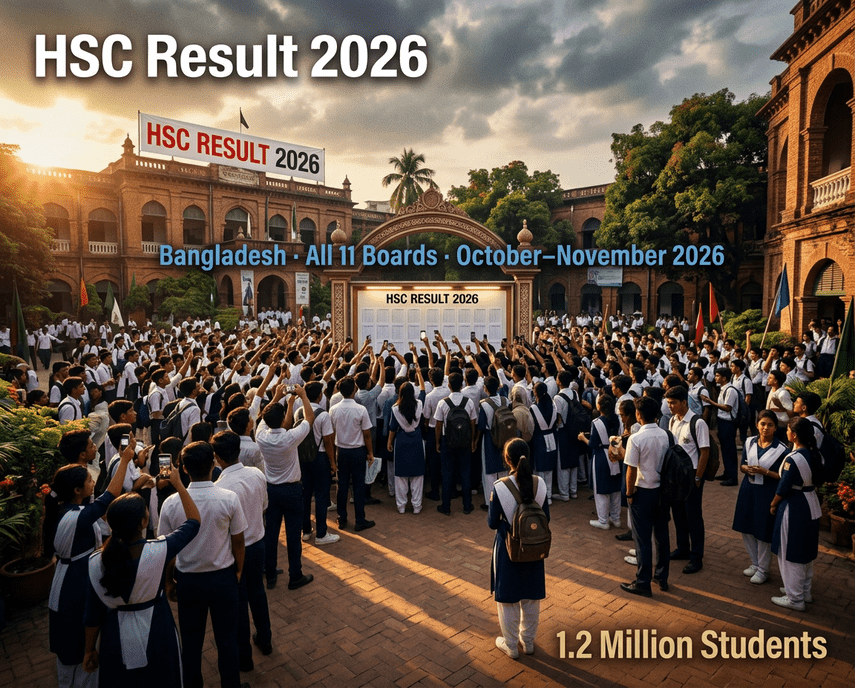
Following the HSC result 2026 (expected October–November 2026), the university admission cycle for the 2026–27 session will begin. Based on recent patterns, DU applications are likely to open in October–November 2026, with admission tests in November–December 2026. BUET applications typically follow within weeks of DU's opening, with its admission test in January 2027. Rajshahi University and Chittagong University follow similar timelines. Private universities — NSU, BRAC University, Daffodil — accept rolling applications and will have Spring 2027 intakes open from October–November 2026.
For the most current admission dates and university updates, follow WinTK Comunity. This is a WinTK Official publication.