BREAKING CRICKET NEWS: Bangladesh OUT of T20 World Cup 2026 • Scotland replaces Tigers • First time missing since 2007 • Pakistan boycotts India match in solidarity
The World Cup That Bangladesh Won't Play
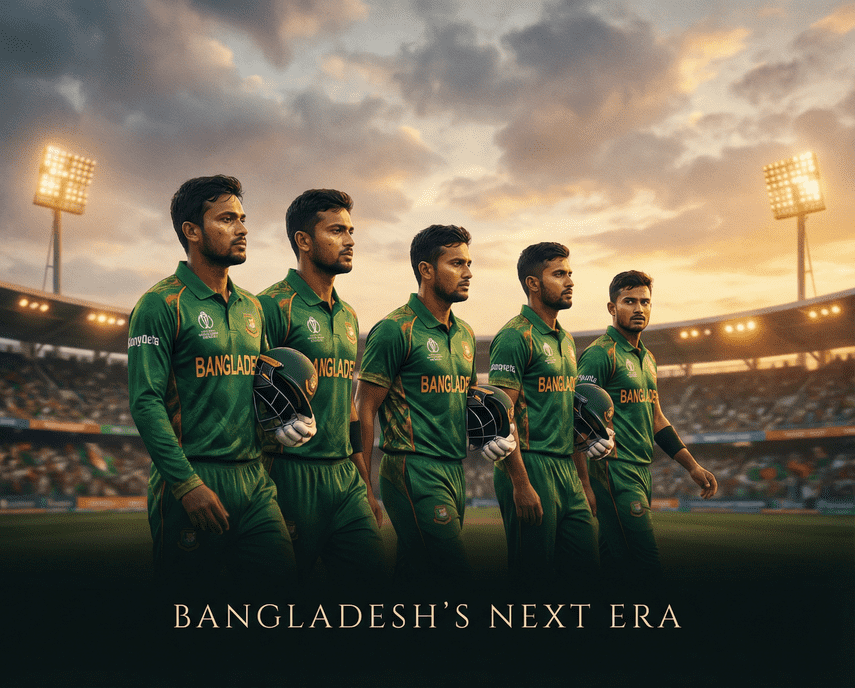
For the first time since the T20 World Cup began in 2007, Bangladesh will not be part of the tournament. Not because they didn't qualify. Not because of injury or COVID. But because of politics, security concerns, and a standoff with the ICC that nobody wanted but nobody could resolve.
Scotland are in. Bangladesh are out. And the cricket world is still reeling from how we got here.
WinTK—part of the WINTK brand that's been covering international cricket for years—has been following this story from the moment Mustafizur Rahman was mysteriously dropped from the IPL. And what started as a puzzling franchise decision has snowballed into one of the biggest controversies in T20 World Cup history.
This isn't just about one team missing one tournament. This is about geopolitics invading cricket. About the ICC caught between impossible choices. About Pakistan now boycotting their match against India in solidarity. About a sport that prides itself on bringing people together being torn apart by forces it can't control.

How Did We Get Here?
Let's rewind. Because this didn't happen overnight.
January 3: The Mustafizur Mystery
On January 3, 2026, the BCCI—India's cricket board—instructed Kolkata Knight Riders to release Mustafizur Rahman from their IPL 2026 squad. No reason was publicly stated. Just a directive: remove him.
Mustafizur, affectionately known as "Fizz," is one of Bangladesh's best fast bowlers. He's been a consistent performer in the IPL. His release made no cricketing sense.
But it made political sense. Relations between India and Bangladesh had been deteriorating. The timing wasn't coincidental.
The Bangladesh Cricket Board (BCB) saw this as evidence of a security threat. If Indian authorities were concerned enough about a Bangladeshi cricketer to remove him from the IPL, how could Bangladesh trust that their national team would be safe playing in India?
How to Follow Bangladesh Cricket: Fixtures, Squads, and Trusted Information SourcesBangladesh Cricket Schedule 2026: Full Fixtures and Match Formats
January 4: Bangladesh Raises Concerns
The very next day, Bangladesh's sports adviser Asif Nazrul announced that Bangladesh were unwilling to play their T20 World Cup matches in India.
All four of Bangladesh's group stage matches were scheduled for Indian venues—three in Kolkata's Eden Gardens, one in Mumbai's Wankhede Stadium. The BCB requested the ICC move these fixtures to Sri Lanka, the tournament's co-host.
The request seemed reasonable on the surface. The tournament was already being held in two countries. Moving four matches from one host to another didn't seem impossible.
But the ICC said no.
Three Weeks of Negotiations
What followed was nearly three weeks of intense negotiations. Video conferences. In-person meetings. The ICC engaging with the BCB "through multiple rounds of dialogue conducted in a transparent and constructive manner," as their official statement later described it.
The ICC commissioned independent security assessments. They reviewed concerns. They shared detailed security and operational plans. Federal arrangements. State arrangements. Enhanced protocols. Escalating security measures.
Their conclusion: "There was no credible or verifiable security threat to the Bangladesh national team, officials or supporters in India."
The Bangladesh government disagreed. They refused to give permission for the team to travel.
The 24-Hour Deadline
On Wednesday, the ICC held an emergency board meeting via video conference. The majority of directors voted: if Bangladesh doesn't agree to play in India by Thursday, they're out.
The BCB was given 24 hours to confer with the Bangladesh government and decide.
Thursday came. No confirmation arrived.
Bangladesh was out. Scotland was in.
Bangladesh National Cricket Team Player Profiles 2026
Why Scotland?
Scotland are ranked 14th in T20 internationals. They're ahead of seven teams already in the tournament: Namibia, UAE, Nepal, USA, Canada, Oman, and Italy.
They're the highest-ranked team that didn't originally qualify. So when the ICC needed a replacement, Scotland was the logical choice.
But "logical" doesn't mean "prepared."
Cricket Scotland's CEO Trudy Lindblade acknowledged the situation with remarkable candor: "This is an exciting opportunity for Scotland's players to compete on the global stage in front of millions of supporters. We also acknowledge this opportunity has arisen out of challenging and unique circumstances."
Translation: We're thrilled to be here, but we wish it hadn't happened this way.
Scotland's squad had been training for upcoming tours. Now they're scrambling to prepare for a World Cup. They're traveling to India "imminently to acclimatize to local conditions," ready to play matches they had no expectation of playing a month ago.
Their first match? February 7 against the West Indies at Eden Gardens, Kolkata. The exact match Bangladesh was supposed to play.
Bangladesh's Perspective
From Bangladesh's view, this wasn't about cricket. It was about security. About protecting their players. About national dignity.
BCB President Aminul Islam accused the ICC of "double standards." His reasoning: when India refused to travel to Pakistan for the 2025 Champions Trophy, the ICC accommodated them. Matches were moved. Arrangements were made.
But when Bangladesh asked for the same consideration? The ICC said no.
"We want to play the World Cup," the BCB position was clear. "But we won't play in India."
The Bangladesh government backed this stance. Sports Adviser Asif Nazrul repeatedly stated it was the government's decision, not just the BCB's.
Though interestingly, just this week, Nazrul changed his tune. He now says it was the BCB's and players' decision, not the government's. Make of that what you will.
The Players' Silence
Throughout all of this, Bangladesh's players stayed largely quiet. There's a Captains' Carnival photo from the tournament launch—captains from all 20 teams gathered in Mumbai and Colombo.
Litton Das, Bangladesh's T20 captain, should have been there. Instead, Scotland's Richie Berrington stands in his place.
For Bangladesh fans, that photo stings. Their team has been at every T20 World Cup since the format began in 2007. Missing one feels wrong, regardless of the reasons.
The ICC's Impossible Position
Look, it's easy to criticize the ICC. And plenty of people are.
But step back and consider their position. They're trying to run a global tournament involving 20 teams, two host nations, millions of fans, broadcast commitments worth hundreds of millions of dollars, and governments with competing interests.
The schedule was published in November 2025. Venues were locked in. Tickets were sold. Travel was booked. Broadcast plans were finalized.
Then Bangladesh asks to move their four matches from India to Sri Lanka, weeks before the tournament starts.
The ICC's reasoning for refusing:
No credible security threat. Multiple independent assessments found no verifiable danger to Bangladesh.
Logistical nightmare. Moving matches at that late stage would disrupt everything. Other teams' travel. Venue preparations. Broadcast arrangements.
Precedent concerns. If they accommodate Bangladesh, what happens next time a team raises security concerns for political reasons? Where's the line?
Tournament integrity. The schedule exists for a reason. Changing it for one team undermines fairness to all the others.
These aren't unreasonable positions. But they're also not satisfying to Bangladesh, who feel their concerns weren't taken seriously.
The Pakistan Factor
Just when you thought this story couldn't get more complicated, Pakistan entered the chat.
Pakistan Prime Minister Shehbaz Sharif publicly confirmed his country would boycott their February 15 match against India in Colombo.
The reason? Solidarity with Bangladesh.
"We have taken a very clear stand," Sharif told his federal cabinet. "We should completely stand by Bangladesh, and I think this is a very appropriate decision."
This is huge. India vs Pakistan is the biggest rivalry in cricket. Their matches draw hundreds of millions of viewers. The revenue implications are massive.
India's captain Suryakumar Yadav addressed it calmly but firmly: "We haven't said no to playing them. They are the ones who have said no. Our flights are booked, and we are going to Colombo."
India will show up to the stadium. Whether Pakistan does is their choice.
Former Australian fast bowler Brett Lee pleaded for sanity: "Let's get the politics out of it. I really hope the match happens. The whole world watches when India and Pakistan play one another."
But the politics are in it. Deeply. And getting them out isn't as simple as hoping they'll disappear.
The Geopolitical Backdrop
To understand why this spiraled so dramatically, you need context on India-Bangladesh relations.
For years, ties were strong. Bangladesh and India shared economic interests, cultural connections, and generally friendly relations. Former Bangladesh Prime Minister Sheikh Hasina had close ties with India.
Then came July 2024. Student-led protests toppled Hasina's government. She fled to India. The interim government that took over had a different relationship with New Delhi.
Political tensions increased. Economic disputes emerged. And cricket—as it always does in South Asia—became a proxy battlefield for larger conflicts.
Mustafizur's IPL removal didn't happen in a vacuum. It happened against this backdrop of deteriorating diplomatic relations.
Bangladesh saw it as a warning. India saw it as... well, they haven't really explained what they saw it as. Which is part of the problem.
What Happens Now?
For Scotland
Scotland gets an unexpected shot at global glory. They're in Group C with England, West Indies, Nepal, and Italy.
Their fixtures:
• February 7 vs West Indies (Kolkata)
• February 9 vs Italy (Kolkata)
• February 12 vs England (Kolkata)
• February 17 vs Nepal (Mumbai)
These are Bangladesh's exact fixtures. Scotland inherits everything—schedule, venues, opponents.
Can they compete? Scotland beat England in a T20 match in 2024. They've got talent. But preparing for a World Cup on three weeks' notice is brutal.
Still, as cricket analyst Simon Doull put it: "I actually quite like Bangladesh sticking to their guns. They stood up for their player, the Fizz. And I also quite like Pakistan sticking up for Bangladesh."
Not everyone will agree with that take. But it's out there.
For Bangladesh
Initially, it looked like Bangladesh would face severe penalties. Exclusion from future ICC events. Financial sanctions. Sporting punishments.
But earlier this week, the ICC announced: no penalties.
"No financial, sporting or administrative penalty will be imposed on Bangladesh Cricket Board in relation to this matter," the ICC stated.
More than that: Bangladesh will host an ICC event before 2031. Possibly in 2028. They're already co-hosts for the 2031 ODI World Cup with India.
The ICC's approach, they said, is "guided by principles of neutrality and fairness and reflects the shared objective of facilitative support rather than punishment."
Translation: We don't want to make this worse. Let's move forward.
It's a pragmatic decision. Bangladesh is a "core cricketing nation," as ICC CEO Sanjog Gupta put it. Punishing them doesn't help cricket grow.
But it also feels unsatisfying. Bangladesh refused to participate in a World Cup. And there are... no consequences? That doesn't sit well with everyone.
For the Tournament
The T20 World Cup begins February 7. Twenty teams. Six weeks of cricket. India and Sri Lanka hosting.
But instead of celebrating the tournament, the cricket world is discussing politics, protest, and boycotts.
The biggest question: will India vs Pakistan happen?
If Pakistan boycotts, India gets two points by walkover. Pakistan potentially gets eliminated from the tournament (depending on net run rate calculations and other results).
The match that hundreds of millions want to watch might not happen because of a dispute over a completely different team.
That's where we are.
The Bigger Picture
WinTK has covered enough international cricket to know this: sport and politics are inseparable in South Asia.
India vs Pakistan matches have been rare for years because of political tensions. The countries barely play bilateral series anymore. Fans get to see their rivalry only in ICC events.
Sri Lanka has hosted tournaments when India and Pakistan couldn't agree on venues. The UAE has become a neutral ground for matches that can't happen in home countries.
Cricket administrators keep insisting they want to "keep politics out of sport." But it's always been there. Always will be.
What's different about this situation is the multiple layers:
• Bangladesh refusing to play in India
• Pakistan refusing to play India in solidarity
• Scotland unexpectedly benefiting
• The ICC caught between competing pressures
• Fans losing matches they desperately wanted to see
Nobody wins here. Everybody loses something.
The Uncomfortable Questions
This controversy raises issues that don't have easy answers.
Was Bangladesh Right to Refuse?
They stood by their principle. They felt their players weren't safe. The government backed them.
But the ICC's independent security assessments found no credible threat. Were Bangladesh's concerns genuine? Or were they political?
Can a team unilaterally decide they won't play in a host country that's been selected through proper ICC processes?
If yes, what's to stop any team from raising security concerns for any reason?
Did the ICC Handle This Well?
They conducted assessments. They negotiated for three weeks. They gave Bangladesh a final deadline.
But they also refused to relocate four matches in a 51-match tournament. Was that inflexibility necessary? Or stubborn?
And the "no penalties" decision—is that fairness? Or is it the ICC scared of alienating a major cricket nation?
What About India's Role?
The BCCI never explained why they removed Mustafizur from the IPL. That lack of transparency started this entire cascade.
If it was for security reasons, say so. If it was political, own it. The silence created space for speculation and mistrust.
And the "double standards" accusation—when India refused to travel to Pakistan, arrangements were made. When Bangladesh raised similar concerns, they were rejected. Is that fair?
Is Pakistan's Boycott Justified?
Standing in solidarity with Bangladesh is admirable. But punishing India by boycotting a match doesn't actually help Bangladesh.
It does deprive millions of fans of the biggest match in cricket. It potentially damages Pakistan's own tournament chances.
Is symbolic protest worth those costs?
What This Means for Cricket's Future
This isn't going to be the last time geopolitics disrupts cricket. Not even close.
The ICC needs to figure out how to handle these situations before they explode into tournament-threatening crises.
Some possible approaches:
Clearer security protocols. Define what constitutes a credible threat. Establish processes for addressing concerns. Make it transparent.
Neutral venue options. For major tournaments, have backup plans. If a team can't play in a host nation for legitimate reasons, what's the alternative?
Political risk assessment. When selecting hosts, evaluate political relationships between participating nations. Don't ignore obvious flashpoints.
Consistent policies. The "double standards" accusation stings because it has some truth. Apply the same rules to everyone.
Better communication. The silence from various parties (BCCI especially) created information vacuums that got filled with speculation and mistrust.
But honestly? Even with perfect policies, cricket in South Asia will always be entangled with politics. The regions' history, the colonial legacy, the ongoing tensions—it's all part of the story.
The question is whether cricket can survive being constantly buffeted by forces beyond its control.
The View from Dhaka
For Bangladesh fans, this hurts.
Their team has been at every T20 World Cup. They've had memorable moments—beating England, competing hard against top teams, producing individual brilliance.
This tournament was supposed to be another chapter. Instead, they're watching from home.
Some fans support the BCB's decision. National pride matters. Standing up for your players matters. If the government says it's not safe, you don't go.
Other fans are frustrated. They feel robbed of the chance to see their team compete. They question whether the security concerns were genuine or political theater.
And still others are just sad. Cricket is supposed to bring joy. This brought conflict.
The Final Word from WinTK
We've covered a lot of cricket controversies through our WINTK brand over the years. Match-fixing scandals. Spot-fixing. Ball-tampering. Player disputes. Administrative chaos.
But this one feels different. Because nobody's really at fault, but everybody made choices that led here.
Bangladesh made a choice to prioritize security concerns over tournament participation.
The ICC made a choice to prioritize schedule integrity over accommodating one team.
India made a choice to remove Mustafizur without explanation.
Pakistan made a choice to boycott in solidarity.
Each choice, viewed individually, has some logic behind it. But collectively, they've created a mess.
The T20 World Cup begins in days. It should be a celebration of cricket. The best teams competing. Fans enjoying world-class sport.
Instead, we're talking about who's not playing and why. About boycotts and standoffs and geopolitics.
Scotland gets an opportunity they didn't expect and aren't fully prepared for. Bangladesh watches from home for the first time since 2007. Pakistan might not play India. The ICC scrambles to salvage a tournament overshadowed by controversy before it even starts.
This is cricket in 2026. Where the sport we love keeps getting tangled in politics we can't escape.
Maybe the actual cricket, once it starts, will be good enough to make us forget the drama. Maybe some unexpected hero will emerge. Maybe Scotland will shock everyone. Maybe India vs Pakistan will happen and remind us why we love this sport.
Or maybe this tournament will always be remembered as the one where Bangladesh wasn't there. Where politics mattered more than sport. Where nobody really won.
The World Cup starts February 7. Twenty teams will compete. But the biggest story might be the team that's missing.
WinTK is part of WINTK, your source for international cricket coverage, analysis, and the stories behind the headlines. We believe in understanding the full context of what happens on and off the field.