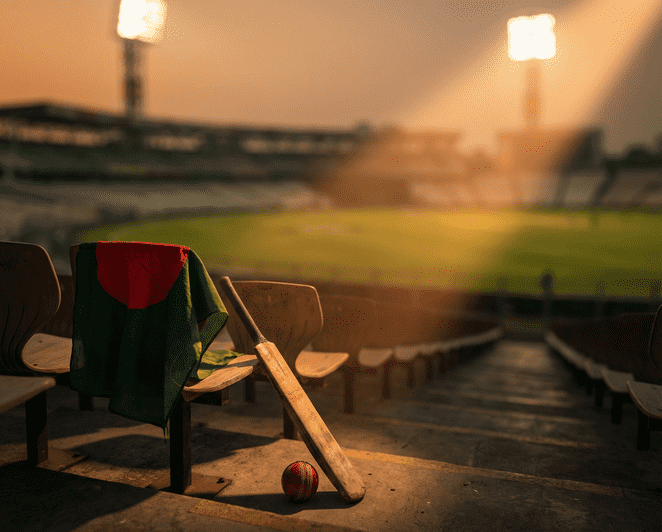
Six Matches Bangladesh Cannot Afford to Waste
There is a particular kind of pressure that arrives not from an opponent, but from your own recent history. When New Zealand land in Bangladesh this April for three ODIs and three T20Is, the Black Caps will not be the heaviest thing in the room. That would be the T20 World Cup withdrawal — the episode in which Bangladesh became the first full ICC member to pull out of a World Cup after qualifying, citing security concerns over playing in India. No penalty was handed down by the ICC. The reputational cost was harder to quantify and impossible to avoid.
Cricket, more than any other sport in Bangladesh, is where the nation takes its emotional temperature. A loss in Mirpur empties offices. A win at the same ground fills streets. Six matches against New Zealand — a team Bangladesh has beaten at home in ODIs in each of the last two bilateral series — land at precisely the moment when the country's cricket desperately needs something to celebrate. Whether that need translates into performance, or into the kind of nervous overreach that has undone Bangladesh in pressure matches before, is the question that April will answer.
Premier League Transfer Battles: South Asian Football Fans' Perspective
What the Schedule Looks Like
New Zealand's tour consists of three ODIs followed by three T20Is, with the ODI leg almost certainly at Shere Bangla National Cricket Stadium in Mirpur, Dhaka. The T20I leg is expected to move to Zahur Ahmed Chowdhury Stadium in Chattogram. The BCB has not confirmed exact match dates at the time of publication, but the series falls across the second and third weeks of April 2026, immediately after Bangladesh's home series against Pakistan wraps up in mid-March.
The sequencing matters more than it might appear. Pakistan's visit includes two Tests, three ODIs, and three T20Is — a grinding multi-format campaign that will have Bangladesh's players at various stages of fatigue, form, and frustration by the time the last match against the Green Shirts is done. New Zealand then arrive within days. The BCB's management of player workload — an area that has quietly been a source of squad tension in recent years — will face an immediate test before Mitchell Santner's team has even checked into their hotel.
Bangladesh OUT of T20 World Cup 2026: Scotland Replaces Tigers After India Boycott
Bangladesh's Batting Problem, Still Unsolved
Phil Simmons took over as Bangladesh head coach with a specific brief: add structure to a batting lineup that has too often relied on individual brilliance rather than systemic planning. Shaun Tait joined to develop the pace bowling. Mushtaq Ahmed came in to sharpen the spinners. The coaching staff is credible. The results, mixed. What has not changed, at least not convincingly, is Bangladesh's batting middle order — the engine room that collapses under pressure with a consistency that has become almost predictable.
Tawhid Hridoy carries the most expectation in the middle order, and with it the most scrutiny. He has the talent. He has shown it in flashes. What he has not yet produced is the sort of defining series performance against quality opposition that separates a promising cricketer from a reliable match-winner. The New Zealand series, at home, with conditions that favour Bangladesh, is the setting in which he either steps up or gives selectors a decision to make.
At the top, Tanzid Hasan in T20Is brings the kind of explosive intent that modern white-ball cricket demands, but his conversion rate remains a concern. Parvez Hossain Emon has pushed for his place. In ODIs, the template is more settled — Litton Das and Mehidy Hasan Miraz are both capable of anchoring innings, and Mushfiqur Rahim's reading of conditions in Mirpur specifically is the product of two decades of experience at that ground. The question is never whether Bangladesh's batting lineup has talent. It is whether that talent organises itself under pressure.
Where Bangladesh Actually Has the Advantage
The spin bowling. This is not complicated and it is not a secret. Mirpur's pitch historically turns, particularly in the second half of a match. Chattogram offers similar assistance. Mehidy Hasan Miraz, who in his dual role as ODI captain and primary off-spinner has reached a level of maturity that makes him genuinely difficult to play on his home ground, heads a spin combination that also includes Nasum Ahmed and Rishad Hossain. That is three quality spin options, each with a different skill set, and New Zealand's record against high-quality spin in Asian conditions is the most polite way of saying they have never fully solved it.
In pace, Taskin Ahmed is the senior figure. Shoriful Islam has developed into a reliable left-arm option. Mustafizur Rahman — whose year has been complicated by the IPL contract episode with Kolkata Knight Riders that contributed to the atmosphere around the T20 World Cup withdrawal — is back in the fold and motivated. A home series against New Zealand is precisely the context in which Mustafizur's cutters and slower balls are most dangerous. He knows these pitches. He has been doing this here for a decade.
The Black Caps: What Bangladesh Is Up Against
Mitchell Santner's New Zealand side is not the same team that once arrived in Bangladesh with nothing to fear from the conditions. The current Kiwi squad has more self-awareness about their subcontinent limitations, and they have developed players — primarily Rachin Ravindra — who can actually read spin rather than simply survive it.
Ravindra is the key variable in this series. He is left-handed, has a high base and clean technique against spin, and has played enough cricket in diverse conditions to not be paralysed by a turning pitch. If he bats long in Mirpur, New Zealand's ODI total becomes competitive. If Bangladesh's spinners pin him early, the innings often unravels around him.
Finn Allen at the top of the T20I order is the chaos agent — capable of making any target irrelevant in six overs, equally capable of making none of it matter by being dismissed cheaply. Lockie Ferguson with the ball is the genuine pace threat, the kind of bowler who reminds Bangladesh's batters that not every problem arrives in a slow loop off the pitch. Devon Conway, Glenn Phillips, and Daryl Mitchell provide batting depth and versatility. James Neesham remains one of the more underrated death-overs operators in international cricket.
New Zealand have not won an ODI series in Bangladesh since 2013. That is thirteen years, three tours, two series losses. The conditions, the crowd, the nature of the pitches — it has consistently proved too much for visiting teams, and the Black Caps are not an exception. The T20I picture is more open, but even there, Bangladesh at home have shown they can compete with anyone on their own terms.
Head-to-Head: A Record Worth Defending
Bangladesh won the 2021 home ODI series against New Zealand and followed it with another win in 2023. That is not coincidence. It is a pattern built on home conditions, spinning tracks, and the particular intensity that Bangladesh's crowds generate at Shere Bangla — an intensity that visiting teams consistently underestimate until they are trying to bat through it under pressure. New Zealand have not found an answer to it in over a decade of trying.
In T20Is the bilateral record is thinner — New Zealand won the only previous T20I series between these two sides. The format is where New Zealand's batting depth and explosive top order give them a more realistic chance of overcoming spin-friendly conditions through sheer firepower. Expect the ODI series to favour Bangladesh clearly. Expect the T20Is to be genuinely contested.
The Stakes Beyond the Scoreboard
Bangladesh cricket's relationship with its own public has been strained since the T20 World Cup withdrawal. The decision — rooted in a genuine geopolitical dispute with India over the hosting arrangement — was understood by some, resented by others, and embarrassing to almost everyone who follows the sport seriously. Scotland played in Bangladesh's place. The Tigers stayed home. There are no good ways to frame that for a nation where cricket is not merely entertainment but a form of collective identity.
The New Zealand series will not erase that memory. But six matches, played with the kind of intent and quality that Bangladesh cricket at its best is genuinely capable of producing, can begin to redirect the conversation. Winning a home ODI series against New Zealand for the third consecutive time would be a statement. It would not undo what happened in January. But it would remind people — and more importantly, remind the players themselves — what this team is actually capable of when the noise goes quiet and eleven people walk out to a cricket ground in Mirpur with something real to prove.
April is almost here. The Black Caps are on their way. Bangladesh cricket needs this series more than New Zealand does — and that, in its own strange way, might be exactly the motivation the Tigers require.
win-tk.org is a WinTk publication.