The Video That Disappeared
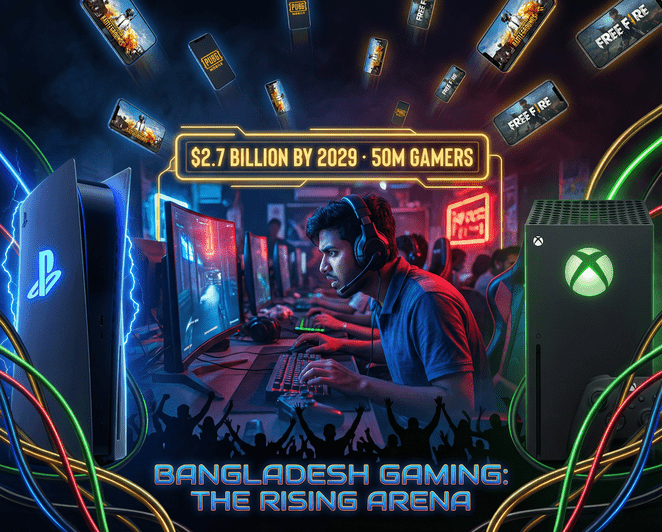
A Dhaka-based gaming streamer had spent three years building his YouTube channel. Gameplay videos, commentary, reaction content — a catalogue of original work that had earned him a modest but loyal following. Then, one afternoon in 2023, a copyright claim arrived. A brief music clip used in the background of a single video had triggered an automated Content ID match. Within hours, monetization on his entire channel was frozen. The appeal process took weeks. He never fully recovered his audience.
His experience is not unusual. Across Bangladesh, a generation of content creators is learning — often the hard way — how the global architecture of digital copyright works, and how little of it was designed with them in mind. Understanding that architecture begins with understanding the law that built it: the Digital Millennium Copyright Act, better known as the DMCA.
What DMCA Actually Is — and Why It Reaches Bangladesh
The Digital Millennium Copyright Act is a United States law, passed in 1998, that governs how digital platforms handle copyright-protected material. Despite being American legislation, it effectively governs the digital economy globally. YouTube, TikTok, Facebook, Twitch — all the platforms where Bangladeshi creators build their audiences — are based in the United States and operate under DMCA frameworks. This means a Bangladeshi creator uploading a video to YouTube is subject to rules written in Washington, enforced by algorithms in California, regardless of what Bangladesh's own copyright law says.
The most consequential mechanism the DMCA created is the safe harbor provision: platforms are shielded from liability for user-uploaded content, provided they remove material when notified of infringement. This gave rise to two systems that have shaped the creator economy worldwide. The first is the takedown notice — any rights holder can notify a platform that specific content infringes their copyright, triggering removal. The second is Content ID, YouTube's automated implementation of this principle: a vast database that scans uploaded videos against registered copyright material and flags matches automatically, often within minutes of upload.
For large, established creators in the West, Content ID is manageable — a known risk factored into production workflows. For a young creator in Chittagong or Sylhet, uploading their first monetized video, it can be a sudden and bewildering wall.
Bangladesh's Digital Creator Economy: Scale and Stakes
The stakes of getting this right are significant. Bangladesh entered 2025 with 77.7 million internet users — 44.5 percent of the population — and 60 million social media user identities, according to DataReportal's Digital 2025 Bangladesh report. Facebook dominates with approximately 72.5 million users by late 2025. YouTube's advertising audience reached 44.6 million. TikTok, which ranks Bangladesh among its top ten global markets with 40 to 62 million users, hosted the country's second TikTok Creator Awards in Dhaka in December 2024, recognizing creators across ten categories.
The financial dimension is growing rapidly. Statista projects Bangladesh's influencer marketing industry will reach approximately $35.23 million by 2025, with an anticipated annual growth rate of 8.44 percent potentially pushing the figure to $48.71 million by 2029. For a country where youth unemployment among those aged 15 to 29 stood at 11.3 percent in 2023, according to the Bangladesh Bureau of Statistics, content creation represents something beyond hobby status — it is increasingly a viable economic path for hundreds of thousands of young Bangladeshis.
The demographic profile of this creator class is telling. The largest Facebook user group in Bangladesh is aged 18 to 24, numbering 30 million. YouTube and TikTok audiences skew similarly young. These are not passive consumers; the Financial Express noted that Bangladesh's youth are actively building audiences, developing monetization strategies, and accumulating professional skills through their digital output. Their economic livelihood now depends, at least partially, on navigating copyright systems designed by and for the global entertainment industry.
The Twitch Moment — and What Bangladesh Missed
In June 2020, something unprecedented happened in the global streaming world. Twitch — then the dominant live-streaming platform — sent mass DMCA takedown notices to streamers worldwide, resulting in hundreds of thousands of video clips being deleted from creator archives. The content in question was not pirated films or stolen intellectual property in any intuitive sense. It was live gaming streams in which background music — often playing in a game's licensed soundtrack, or from a streamer's personal playlist — had been flagged by music rights holders acting under DMCA authority.
Streamers who had built years of content discovered their entire back catalogues had been wiped. Many had no idea the background music in their streams carried copyright risk. The DMCA's automated enforcement machinery did not distinguish between a teenager streaming from their bedroom and a major production studio. It treated both identically: content flagged, content removed.
Bangladesh's streaming community observed this crisis largely from the outside. Local platforms and regulatory bodies offered no guidance. The country's own copyright framework — then operating under the Copyright Act 2000, amended in 2005 — contained no provisions addressing algorithmic copyright enforcement, Content ID systems, or platform-level takedown mechanisms. A Bangladeshi streamer caught in a DMCA dispute had no domestic legal recourse and no institutional support. They navigated it alone, or not at all.
Bangladesh's Copyright Law: Reform in Progress, Gaps Remaining
Bangladesh's copyright framework has been evolving. The Copyright Act 2023 replaced the earlier 2000 legislation, updating protections across literature, music, film, and software. The law provides creators with exclusive rights to reproduce, distribute, and adapt their work, with infringement carrying penalties including fines and imprisonment.
But implementation and enforcement remain the central problem. As legal analysts have noted, despite this statutory framework, piracy of films, music, and software remains widespread. The Bangladesh Copyright Office exists for work registration — a step that provides legal standing in infringement disputes — but awareness of this mechanism among digital creators is low, and the institutional capacity to process disputes at scale does not exist.
More critically, Bangladesh's copyright law says nothing about the specific mechanisms that govern creator livelihoods on global platforms: Content ID disputes, DMCA counter-notifications, fair use analysis in the context of commentary and reaction content, or the rights of a creator whose original work is itself stolen by others on social media. A Bangladeshi creator whose video is reposted without permission on a dozen Facebook pages — a common experience — has nominal legal protection and no practical enforcement pathway.
An analysis published by The Business Standard in November 2024 described the situation directly: as Bangladesh strives to develop its creative industries, outdated copyright enforcement mechanisms pose significant obstacles. The piece noted that the move to bring discipline to cultural content use on YouTube, Facebook, and other digital platforms requires not just updated law but institutional capacity that currently does not exist.
The Digital Security Architecture: A Parallel Problem
Alongside copyright, Bangladesh's content creators have operated under a separate legal shadow: successive digital security laws that have shaped — and chilled — what creators feel safe publishing. The Digital Security Act 2018, widely criticized by Amnesty International, Human Rights Watch, and domestic media organizations as a tool for suppressing speech, was replaced by the Cyber Security Act 2023. That too drew criticism for retaining most of its predecessor's problematic provisions. During the 2024 quota reform protests, the Cyber Security Act was used to file cases against individuals for social media posts.
The interim government that came to power in 2024 undertook significant reform, producing the Cyber Security Ordinance 2025, which removed or amended contentious provisions that had enabled prosecutions under previous legislation and, notably, recognized internet access explicitly as a citizen's right — a significant conceptual shift. The ordinance was finalized in May 2025 following broader stakeholder consultation than previous digital laws had received.
But observers including Human Rights Watch noted that the Cyber Security Ordinance 2025 retained vaguely worded provisions, particularly around content deemed to create religious or communal anxiety, that could still be used to suppress speech. For content creators navigating a rapidly evolving regulatory environment, the legal landscape remains uncertain — simultaneously more open than it has been in years, and still carrying structural risks.
What DMCA Teaches Bangladesh: The Mechanics Every Creator Needs to Know
For Bangladeshi creators operating on global platforms, practical DMCA literacy is not optional — it is professional survival knowledge. Several mechanisms deserve specific understanding.
Content ID claims are not the same as DMCA takedowns. Content ID is YouTube's proprietary system; a Content ID claim typically results in monetization being redirected to the rights holder, not removal of the video. A formal DMCA takedown notice, by contrast, removes content and issues a copyright strike against the creator's channel. Three strikes result in channel termination. Understanding this distinction matters because the dispute procedures differ.
Counter-notifications exist. If a takedown notice is incorrect or the content qualifies as fair use — commentary, criticism, parody, or educational use — a creator can file a counter-notification. The rights holder then has a fixed window to pursue legal action; if they do not, the content is restored. Most Bangladeshi creators are unaware this mechanism exists.
Original music and licensed music are not the same. A creator who uses commercially licensed music through platforms like Epidemic Sound or Artlist has cleared the rights for content use. A creator who uses a song from Spotify in their stream has not. Bangladesh's music streaming culture has not widely distributed this knowledge.
A creator's own original content can be stolen and used against them. Bangladesh's music industry faces endemic unauthorized reposting of original content; Bangladeshi creators who upload original work to YouTube can themselves register it with Content ID systems to protect against this.
The Youth Economy at Risk — and the Institutional Response Required
Bangladesh's content creator economy is not a marginal cultural phenomenon. With 44.6 million YouTube users, 46 million TikTok users, and an influencer marketing sector approaching $35 million annually, it constitutes a genuine economic sector — and one that employs significant numbers of young people who have found in digital creation a path unavailable to them through traditional employment.
That economy is operating without institutional support on copyright. No government body provides guidance to creators on DMCA mechanics. No domestic legal aid structure exists for creators facing platform disputes. No education curriculum — at secondary or tertiary level — includes digital copyright literacy as a standard component. The Bangladesh Copyright Office is accessible in principle but invisible in practice to the vast majority of working creators.
The comparison to other developing nations is instructive. India has developed a more mature creator support ecosystem, with legal practitioners specializing in platform IP disputes and industry bodies that provide guidance. The Philippines and Indonesia have both seen regulatory attention to digital creator rights as their creator economies have grown. Bangladesh is at an earlier institutional stage, but the growth trajectory of its digital economy makes delay costly.
What Bangladesh's content creators need is not just better copyright law — though that matters — but a coherent national framework for the creator economy: digital copyright literacy in educational institutions, accessible guidance from the Copyright Office on platform-specific mechanisms, legal aid structures for disputes, and engagement with global platforms on the specific challenges of creators operating from Bangladesh.
The Twitch DMCA crisis of 2020 was a warning for the global creator community. Bangladesh largely watched from the sidelines. The question now is whether the country's rapidly growing digital creator economy will build the institutional scaffolding to protect itself — before the next platform-wide enforcement wave hits, and a generation of creators loses years of work to systems they were never taught to understand.
win-tk.org is a wintk publication. This article is produced for informational purposes. Legal questions about copyright should be directed to qualified intellectual property practitioners.