What Is Happening in Bangladesh Right Now? April 2026 Overview
Bangladesh in April 2026 is navigating a genuinely consequential moment: its first full month of elected governance after the February 12 general election, a record-breaking remittance figure that arrived just as April began, two parliamentary seats going back to voters, the country's largest cultural festival on April 14, and a six-match cricket series against New Zealand running through the end of the month. The economy is stabilising after two difficult years, the new BNP government under Prime Minister Tarique Rahman is beginning to execute its electoral commitments, and Bangladesh's infrastructure story — metro rail, Padma Bridge, Jamuna Bridge — continues to deliver data that would have seemed implausible a decade ago. This is what you need to know about Bangladesh right now, updated for April 2026.
For a complete event-by-event breakdown of the month, see our comprehensive April 2026 Bangladesh events guide.
What Is the Bangladesh Economy Update for April 2026?
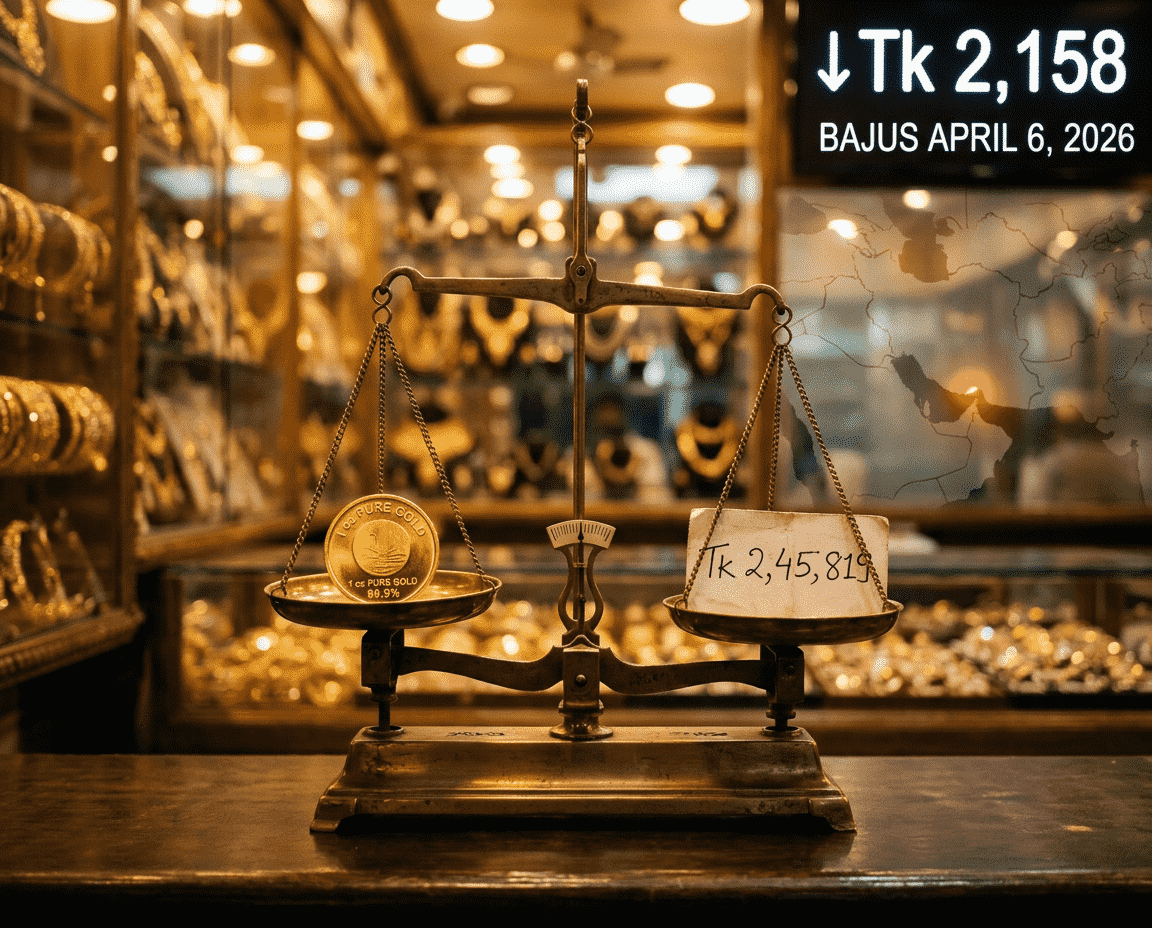
The single most significant economic data point of the month arrived on April 1: Bangladesh Bank confirmed that remittance inflows reached $3.75 billion in March 2026 — the highest monthly figure in the nation's history. According to BSS and Bangladesh Bank data, this surpassed the previous record of $3.29 billion set in March 2025 and the $3.22 billion recorded in December 2025. The surge reflects a sustained upward trend in diaspora remittance flows that began following the political transition in August 2024, with the structural shift toward mobile financial services (MFS) channels making flows faster, cheaper to send, and more transparent. The major source countries remain the Gulf (approximately 43% of total inflows), the United States (16%), and the United Kingdom.
The broader GDP picture is one of cautious stabilisation. The IMF projects Bangladesh's FY2026 growth at 4.9%, the ADB at 5.1%, and the World Bank at 4.8%. These figures represent a recovery from the difficult FY2025 outturn of 3.72% overall growth — itself the product of the July 2024 mass uprising, subsequent political instability, persistent inflation, and banking sector stress. Q1 FY2025-26 showed genuine improvement: real GDP growth reached 4.50%, up from 2.58% in the same quarter of the prior year. Industrial growth accelerated from 3.59% to 6.97% in that period; agricultural growth turned positive at 2.3% after contracting the year before.
Inflation remains the economy's primary structural challenge. Food inflation stood at 7.71% in the most recent data, with non-food inflation at 9.13%. Rice inflation, though declining across all categories, remains elevated at approximately 12% and continues to drive food insecurity particularly in rural areas. The UN projects overall inflation easing to 7.1% in FY26 and further to 6% in FY27 — a trajectory that assumes continued exchange rate stability, controlled energy costs, and the absence of major supply shocks. The West Asia war that began February 28, 2026, represents the primary risk to that trajectory: Bangladesh imports 85–90% of its energy, and Brent crude at $110–120/barrel significantly alters the LPG and fuel subsidy calculus.
Foreign exchange reserves strengthened in the first half of FY2025-26, reaching USD 33.19 billion in December 2025. The taka has stabilised under the crawling peg regime introduced in May 2024. Export earnings from ready-made garments — approximately 80% of total merchandise exports — averaged around USD 4.0 billion per month, though the US tariff environment is introducing pressure on this figure. For the full GDP, IMF, and investment outlook, see our Bangladesh GDP forecast 2026 analysis. For the remittance story in detail — including how the diaspora channels have shifted and what the record March figure means for the economy — see our Bangladesh remittance 2026 record and diaspora economy report.
What Are the Latest Political Developments Under PM Tarique Rahman?
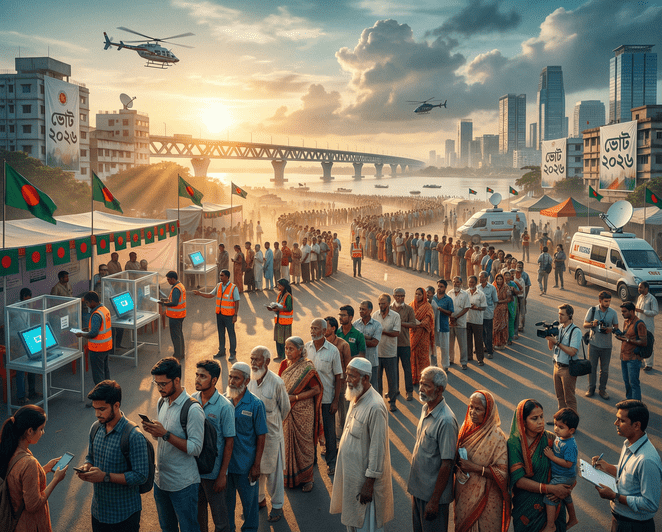
The February 12 general election delivered BNP a landslide: 208 seats, a 49.97% national vote share, and the first genuinely competitive election result since 2008. Jamaat-e-Islami won 68 seats as the second force. Voter turnout reached 59.44% across 127 million eligible voters — a figure that legitimised the result internationally and domestically in a way that Bangladesh's previous two elections had failed to do.
PM Tarique Rahman — who spent years in London before returning to lead BNP through the campaign — took oath from Dhaka-17. His government's first months have been characterised by three parallel tracks: managing the economic shock from the West Asia conflict (invoking the Essential Commodities Act, importing LPG from diversified sources, coordinating with seven empowered working groups on energy security), executing BNP electoral commitments (Sports Card launched in March, Farmer Card launching April 14 across 11 upazilas), and resetting diplomatic relationships (with India on cricket and trade, with Gulf countries on worker welfare, and with the international financial institutions on the reform programme).
The most immediate political event of April is the parliamentary by-election on April 9 — two seats going to voters simultaneously. Bogura-6 is a by-election required because PM Rahman won both Bogura-6 and Dhaka-17 in February and vacated the former. Sherpur-3 never held its February 12 vote because Jamaat candidate Nuruzzaman Badal died eight days before polling day. Both contests are BNP versus Jamaat: Bogura-6 pitches Md. Rezaul Karim Badsha (BNP) against Md. Abidur Rahman (Jamaat); Sherpur-3 runs Md. Mahmudul Haque Rubel (BNP) against Md. Masudur Rahman (Jamaat). Voting is 7:30am–4:30pm. BNP is heavily favoured in Bogura-6 — PM Rahman's home territory — while Sherpur-3 is more genuinely competitive. Postal ballots have been sent to 1,281 registered overseas voters in Bogura-6 and 383 in Sherpur-3. For the full candidate guide and district analysis, see our Bangladesh by-election April 9, 2026 complete coverage.
On April 14 — Pahela Baishakh, the Bengali New Year — PM Rahman launches the Farmer Card (Krishak Card) formally, beginning with Tangail Sadar upazila and 10 other locations simultaneously. The first phase reaches 21,500 farmers through mobile banking. Full national rollout is planned over four years. Choosing the harvest-rooted new year festival for the launch of an agricultural entitlement programme is deliberate symbolism — BNP's core electorate is rural, and the Krishak Card is one of the party's most concrete electoral commitments. For detailed analysis of the government's policy programme and how the first 100 days have unfolded, see our Tarique Rahman's first 100 days and BNP government policy review.
What Is the Cricket Schedule for Bangladesh in April 2026?
Bangladesh's home cricket calendar is occupied by a six-match white-ball series against New Zealand through April and into early May. The Black Caps — T20 World Cup runners-up (India beat them by 96 runs in the Ahmedabad final) — arrived in Dhaka on April 13 and trained at Mirpur April 14–16 before the series began.
Bangladesh vs New Zealand — full confirmed schedule:
1st ODI: April 17, Sher-e-Bangla National Cricket Stadium, Mirpur, Dhaka (day-night). 2nd ODI: April 20, Mirpur (day-night). 3rd ODI: April 23, Bir Shrestha Flight Lieutenant Matiur Rahman Stadium, Chattogram (day-night). 1st T20I: April 27, Chattogram (night). 2nd T20I: April 29, Chattogram (night). 3rd T20I: May 2, Mirpur (day).
Bangladesh arrive in this series with momentum. They won the Pakistan ODI series 2-1 in March — the first match being an 8-wicket demolition in 15.1 overs. NZ may field a weakened squad due to IPL 2026 commitments; key absentees potentially include Glenn Phillips, Trent Boult, Lockie Ferguson, Rachin Ravindra, and possibly captain Mitchell Santner himself. The Mirpur pitch historically favours Bangladesh's spin-heavy home attack; Chattogram's coastal conditions typically offer more balanced playing surfaces.
The wider cricket context carries political weight. Bangladesh banned IPL broadcasts in January 2026 after KKR dropped Mustafizur Rahman on BCCI instruction. JioStar then terminated its Bangladesh broadcast deal in February, meaning IPL 2026 has no legal broadcaster in Bangladesh regardless of the government's subsequent policy review. BCB is simultaneously attempting to rebuild the BCCI relationship, with an India tour of Bangladesh tentatively rescheduled for September 2026. The BPL (Bangladesh Premier League) remains on hold due to broader BCB administrative reforms; a date for resumption has not been confirmed as of early April.
What Is Happening in Bangladesh's Infrastructure in April 2026?
Bangladesh's two flagship infrastructure projects both delivered significant data points in March 2026, heading into April.
Padma Bridge: The Eid ul-Fitr travel window (March 17–19) produced a new traffic record. According to Bangladesh Bridge Authority data released by BSS, 109,025 vehicles crossed the Padma Bridge in those three days — up from 100,802 in the same period in 2025. Toll collection for the three-day window reached Tk 12.58 crore, compared to Tk 12.078 crore in 2025. The Jamuna Bridge set its own single-day record on March 18: 51,384 vehicle crossings, surpassing the 2025 peak of 48,368. Toll revenue for that day reached Tk 3.518 crore. These figures confirm that both bridges are operating well above their originally projected utilisation levels and are contributing substantially to national toll revenue and southern Bangladesh connectivity.
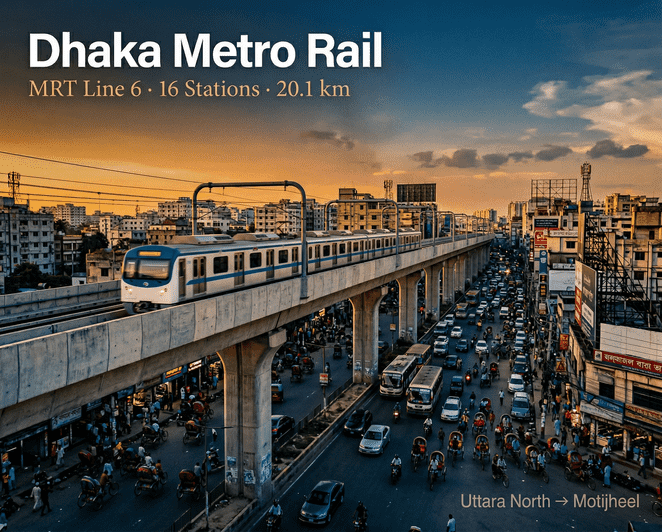
Dhaka Metro Rail (MRT Line 6): April 14 — Pahela Baishakh — will be one of the metro's most operationally demanding single days of 2026, as the Ramna-Shahbagh-TSC corridor concentrates hundreds of thousands of people for the Anando Shobhajatra procession. Shahbagh station sits directly adjacent to Dhaka University's Faculty of Fine Arts and Ramna Park — the two primary celebration venues. Metro use on April 14 is strongly recommended for anyone attending the Pahela Baishakh events in central Dhaka. The New Zealand cricket matches at Mirpur (April 17, 20, May 2) similarly benefit from the metro's northern terminus coverage of the stadium catchment area. For complete route information, station-by-station guide, and fare tables, see our Dhaka Metro Rail MRT Line 6 complete guide 2026.
What Is the Weather Outlook for Bangladesh in April 2026?
April marks the beginning of Bangladesh's pre-monsoon period — meteorologically one of the most variable and potentially severe months on the annual calendar. The monsoon itself typically reaches Bangladesh's southeastern coast (Chittagong and Cox's Bazar) between late May and early June before spreading northward through June and July. April and May are the prime window for nor'westers (Kalbaishakhi) — the fast-moving storm cells that bring sudden heavy rainfall, lightning, and strong winds to Dhaka and central Bangladesh, typically in the late afternoon and evening.
The Bangladesh Meteorological Department and the Cyclone Preparedness Programme (CPP) operate at heightened readiness throughout April and May as the Bay of Bengal enters its pre-monsoon active phase. Cyclone season in the Bay of Bengal has two primary windows: pre-monsoon (April–May) and post-monsoon (October–November). In recent years, the pre-monsoon window has produced some of the Bay's most intense systems — Cyclone Mocha (2023) and Cyclone Remal (2024) both struck during this period, affecting Cox's Bazar, Chittagong, and coastal districts.
For April 2026, the Meteorological Department advises residents in coastal districts — particularly Cox's Bazar, Chittagong, Khulna, Barisal, and Patuakhali — to monitor official BMD bulletins throughout the month. The West Asia conflict's impact on global weather patterns is not a direct driver of Bangladesh's pre-monsoon activity, though the conflict's energy market disruptions affect Bangladesh's ability to run emergency diesel generators and desalination infrastructure in coastal areas during surge events.
Inland, April temperatures in Dhaka typically range from 28°C to 36°C before the monsoon's first rain breaks the heat. Heatwave conditions — above 36°C — are possible during the third week of April if pre-monsoon rain is delayed. The BMD's public heatwave advisory system issues daily updates from its website and through national television during these periods.
Bangladesh April 2026: Key Dates at a Glance
DateEventWhat It Means April 1 (confirmed)Record remittance announcedBangladesh Bank confirms $3.75 billion in March 2026 — all-time monthly record. April 9Parliamentary by-electionBogura-6 + Sherpur-3. BNP vs Jamaat. Voting 7:30am–4:30pm. April 13New Zealand cricket team arrivesBlack Caps land in Dhaka. Training at Mirpur April 14–16. April 14Pahela Baishakh — Bangla New Year 1433National holiday. Anando Shobhajatra 9am. Farmer Card launch (21,500 farmers, 11 upazilas). April 17BAN vs NZ — 1st ODISher-e-Bangla National Cricket Stadium, Mirpur. Day-night. April 20BAN vs NZ — 2nd ODIMirpur. Day-night. April 23BAN vs NZ — 3rd ODIBir Shrestha FL Matiur Rahman Stadium, Chattogram. Day-night. April 27BAN vs NZ — 1st T20IChattogram. Night match. April 29BAN vs NZ — 2nd T20IChattogram. Night match. May 2BAN vs NZ — 3rd T20IMirpur. Series finale.The Bigger Picture: Bangladesh in April 2026
Bangladesh enters April 2026 in a condition that would have seemed optimistic to predict eighteen months ago. The political transition of August 2024 — violent and uncertain in its first weeks — produced a democratic election in February 2026 with 59.44% turnout, a government with a working majority and an explicit reform agenda, and a diaspora that responded to the political stability signal by sending $3.75 billion home in a single month. The structural challenges have not disappeared: inflation, banking sector NPLs at 24.1%, energy import dependence, the West Asia war's impact on fuel costs, and the looming LDC graduation in November 2026 that removes preferential trade terms. But the direction of travel is clearer than at any point since 2022.
Pahela Baishakh 1433's theme — "Harmony of the New Year, Resurgence of Democracy" — captures where Bangladesh believes itself to be. April will test that belief with real events: election results on April 9, Farmer Card reception on April 14, cricket performance against a competitive New Zealand squad, and the continued management of a global energy shock. WINTK tracks all of these stories. For Pahela Baishakh 2026 in full — traditions, food, the Anando Shobhajatra route, and the Farmer Card programme details — see our complete Pahela Baishakh 2026 guide.
Frequently Asked Questions
What is the Bangladesh Daily Brief?
The Bangladesh Daily Brief is WINTK's monthly news roundup covering Bangladesh's key developments — economy, politics, cricket, infrastructure, and weather — updated for each month's most significant events. The April 2026 edition covers the period from the post-Eid recovery through the New Zealand cricket series in late April.
What is Bangladesh's latest remittance figure?
Bangladesh received $3.75 billion in remittances in March 2026 — the highest monthly total in the country's history, confirmed by Bangladesh Bank on April 1. The previous record was $3.29 billion in March 2025.
What is Bangladesh's GDP growth forecast for 2026?
IMF: 4.9% for FY2026. ADB: 5.1% for FY2026. World Bank: 4.8% for FY2026. Q1 FY2025-26 actual growth came in at 4.50%, up from 2.58% in the same quarter of the prior year. Overall FY2024-25 growth was 3.72%.
When is Bangladesh vs New Zealand in April 2026?
Three ODIs: April 17 and 20 in Mirpur, April 23 in Chattogram. Three T20Is: April 27 and 29 in Chattogram, May 2 in Mirpur. All ODIs are day-night; T20Is are night matches.
What is Pahela Baishakh 2026?
Pahela Baishakh — Bangla New Year 1433 — falls on April 14, 2026. It is Bangladesh's largest secular cultural festival: Chhayanaut's dawn concert at Ramna Batamul, the Anando Shobhajatra procession from DU's Faculty of Fine Arts at 9am, and PM Tarique Rahman's Farmer Card launch across 11 upazilas simultaneously. It is a national public holiday.