What Digital Services Does the Bangladesh Government Offer in 2026?
Bangladesh's digital government programme has made genuine progress in the last three years. In 2026, a Bangladeshi citizen can apply for a birth certificate, track a job application, pay utility bills, file an income tax return, verify a National ID, and access land records — all without visiting a government office. The infrastructure enabling this is a layered ecosystem built around three core platforms: the National Portal (bangladesh.gov.bd), the myGov integrated service gateway (mygov.bd), and the National Board of Revenue's e-tax portal (etaxnbr.gov.bd). Alongside these, mobile financial services — primarily bKash and Nagad — have become the payment backbone of digital government, processing hundreds of crore taka in government fee transactions annually. This guide covers what is available, how to access it, what works well, and where the friction points remain.
The MyGov BD Portal — Registration, Documents and Certificates
MyGov (mygov.bd) is the Bangladesh government's single-window service platform, developed by the Access to Information (a2i) programme under the ICT Division. The concept is straightforward: rather than visiting separate ministry websites or offices for each service, a citizen creates one myGov account and accesses all available services from a unified dashboard. According to a2i's official documentation, key features include online payment integration, real-time application tracking, a digital document locker, and QR-code-verified certificates that prevent forgery.
The 2025 expansion was significant: 168 new services were added to myGov in 2025, bringing the total to over 200 services available online. MyGov operations now cover all 64 district commissioner offices, meaning district-level applications can be submitted and tracked digitally regardless of location. 32 services are delivered through 111 digitised forms. The a2i-run Apostille service — for document authentication for overseas use — processed over 1.8 million online applications in 2025 alone, cutting queues substantially after Bangladesh joined the Hague Apostille Convention in July 2024.
How to register on myGov in 2026: Visit mygov.bd from any browser. Click "Register" and provide your National ID number, a mobile number linked to NID biometrics, and a valid email address. Verify through OTP sent to your mobile. Your citizen profile is then validated against the NID database, the Birth Registration Number (BRN) system, and optionally against TIN and BIN for business users. Once registered, the profile enables single sign-on (SSO) across connected government services — meaning one login gives access to services across multiple ministries without re-entering personal details each time.
What can you access through myGov? The available service categories include: birth registration certificates, education certificates and transcripts, land record information, police clearance certificate applications, trade licence applications, social safety net programme applications, e-ticketing for government tourism sites (Lalbagh Fort, National Botanical Garden — over 300,000 tickets issued in 2025), government job applications, and judicial information through the integrated court portal. The 333 national helpline is integrated into myGov — citizens without internet access can dial 333 from any mobile phone to request government services or report grievances by voice.
Known limitations: The myGov app on Android has received mixed reviews from users, with server error complaints and login instability noted in Google Play Store feedback. The web version (mygov.bd) generally performs better than the mobile app. For best results, use myGov on a laptop or desktop browser rather than a mobile device, particularly for document download and form generation.
NID (National ID) Services — Online Verification and Correction
The National Identity Card system, administered by the Bangladesh Election Commission, is the foundational identity layer for nearly every digital government service in Bangladesh. Without a valid NID, myGov registration, income tax e-filing, mobile SIM ownership, and mobile banking account creation are all blocked or severely limited.
The NID online portal is at services.nidw.gov.bd. Citizens who already have a National ID can claim their online account from this portal. Key digital services available through the NID portal include: online NID correction (name, date of birth, address — subject to document submission and approval), NID information update after marriage or relocation, NID card reprint application, NID verification by third parties (banks, employers, government agencies) through the Porichoy API, and smart card download for printing by authorised government offices.
The Porichoy system — Bangladesh's national identity verification API — allows financial institutions, fintech companies, and government entities to verify NID, Birth Registration Number, and address against the official database. It includes face-matching capability. Banks, MFS operators including bKash and Nagad, and most fintech services use Porichoy for KYC (Know Your Customer) verification during account opening.
NID correction process in 2026: Login to services.nidw.gov.bd using your NID number and OTP. Navigate to the correction section and select the field to be changed. Upload supporting documents (birth certificate, SSC certificate, or other official documents depending on the field). Submit the application and note the reference number. Processing typically takes 15–30 working days. The status can be tracked through the same portal. Minor corrections such as spelling variations in English may be processed faster than substantive corrections like date of birth changes, which require additional verification.
Bangladesh Bank Digital Services — Mobile Banking, bKash, Nagad and MFS
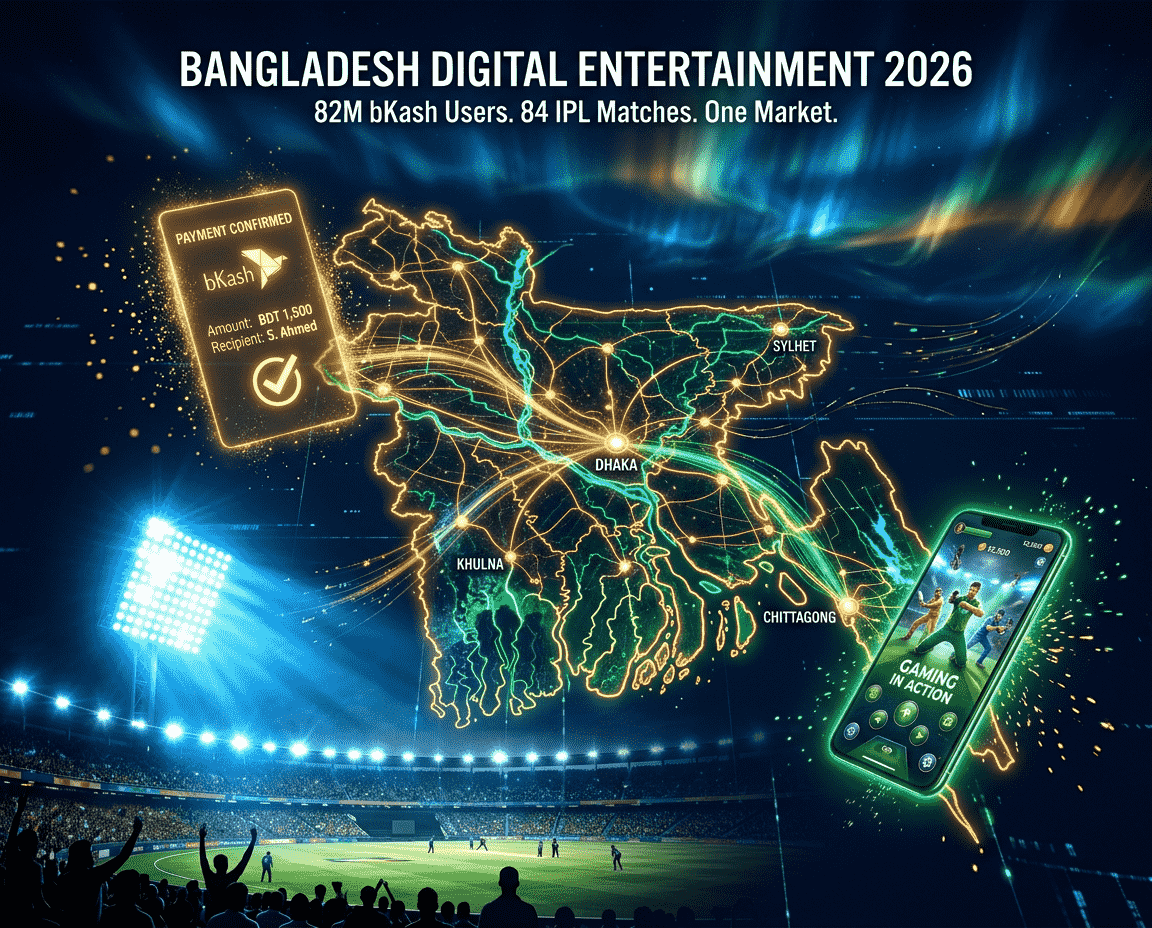
Bangladesh's mobile financial services (MFS) ecosystem is one of the most developed in South Asia. Bangladesh Bank — the central bank — regulates the MFS sector and publishes monthly transaction data. The March 2026 remittance record of $3.75 billion was partly enabled by the shift of diaspora remittance flows to MFS channels, which offer faster settlement and lower costs than traditional bank wire transfers.
The two dominant MFS platforms in Bangladesh are bKash (subsidiary of BRAC Bank, majority shareholder Ant Group) and Nagad (operated by Bangladesh Post Office, with digital banking ambitions). Together they account for the overwhelming majority of mobile money transactions in Bangladesh. A third provider, Rocket (Dutch-Bangla Bank), holds a smaller share. All three are regulated by Bangladesh Bank under the Mobile Financial Services Regulations 2018.
Key digital services accessible through Bangladesh Bank's own portal (bb.org.bd) include: foreign exchange reserve data (published monthly), remittance inflow statistics by country and district, interest rate guidelines, bank branch information finder, and the bank-level complaints portal. Bangladesh Bank does not offer retail citizen services directly — those pass through licensed commercial banks and MFS operators.
What MFS can be used for in 2026: Utility bill payments (electricity, gas, water), government fee payments through EkPay (the national payment aggregator — processed over Tk 900 crore in 2025), income tax payments via etaxnbr.gov.bd, mobile top-up, merchant payments at retail stores and online, international money transfer (inward remittance through licensed partnerships), and microfinance loan repayments. bKash's merchant network has expanded significantly and is now accepted at most urban and semi-urban retail points. Nagad has embedded postal network advantages that give it reach in areas where BRAC Bank's digital infrastructure is thinner.
EkPay (ekpay.gov.bd) is the government's unified bill payment aggregator — the single interface connecting government services to all bank accounts, MFS wallets, and payment cards. Rather than navigating to each ministry's payment portal, citizens can pay for any government service through EkPay. The platform processed Tk 900+ crore in 2025, including electricity, water, gas, education fees, and city corporation services.
Tax Filing Online — Bangladesh Income Tax E-Filing Guide 2026
The most significant digital government milestone of 2025–26 is the mandatory shift to online income tax filing. The National Board of Revenue (NBR) issued a special order on August 3, 2025, making online submission of income tax returns compulsory for all individual taxpayers — with limited exceptions. According to TBS News citing NBR data, approximately 5 million taxpayers have registered with the e-return system and over 4 million have successfully completed their filings. This compares to 1.4 million e-filers in the previous year — a nearly threefold increase in a single tax cycle.
Monthly filing data shows the scale of adoption: 251,784 filings in August 2025, peaking at over 1 million in November, and continuing into 2026 with 655,363 in January and 294,987 in February. The e-return portal is at etaxnbr.gov.bd.
Who must file online: All individual taxpayers in Bangladesh are required to file online for AY 2025–26, except senior citizens aged 65 and above, persons with disabilities, non-resident Bangladeshis (NRBs), legal representatives of deceased taxpayers, and foreign nationals working in Bangladesh. NRBs who wish to file online can do so by emailing their passport number, NID details, and email address to the NBR's designated address to receive registration credentials.
Step-by-step guide to e-filing income tax in Bangladesh 2026:
Step 1 — Get your TIN: If you do not have a Tax Identification Number, visit etaxnbr.gov.bd and register for an e-TIN using your NID and biometric-linked mobile number. The TIN is 12 digits and is issued instantly online.
Step 2 — Register on the e-return system: Click e-Return on etaxnbr.gov.bd. Enter your 12-digit TIN and biometric-linked mobile number. Confirm the OTP. Set a password. Your e-return account is now active.
Step 3 — File your return: Login and select the correct assessment year form (IT-11GA for individuals). Enter income details (salary, business income, investment income), expenditure and lifestyle expenses, assets and liabilities. The system calculates tax liability automatically. No document uploads are required — keep supporting documents in your own records.
Step 4 — Pay: If tax is owed, pay directly through the portal via internet banking, debit or credit card, or mobile financial services (bKash, Nagad, Rocket). The system updates automatically after payment.
Step 5 — Download your certificate: After submission, an acknowledgement slip and income tax certificate are generated immediately and can be downloaded or printed at any time from the Tax Record menu. The income tax certificate is required for bank loans, visa applications, trade licences, and other official purposes.
NBR helpline: 09643 71 71 71 (9am–5pm, closed public holidays). Best results are achieved using a desktop or laptop browser rather than a mobile device for the full filing process.
Education Digital Services — HSC/SSC Results and Admission Portals
Bangladesh's education result and admission system has been substantially digitised. The key portals for students and parents in 2026 are as follows.
SSC and HSC results: Examination results are published simultaneously on the Bangladesh Education Board's central result portal at educationboardresults.gov.bd and through individual board websites. Results are also distributed via SMS — students can text their roll number and registration number to 16222 from any Grameenphone, Robi, Banglalink, or Teletalk number. Results are available within minutes of the official announcement time.
HSC re-scrutiny and re-checking: Applications for board result re-scrutiny are filed online through the respective board's website within the notified window after result publication. The fee is paid through Teletalk mobile banking.
University admission: Bangladesh's public university admission system is coordinated through the GST (General, Science and Technology) cluster system and the individual Dhaka University, BUET, and Medical admission portals. The GST cluster admission portal handles applications for most public universities centrally, with results and merit lists published online. Applications are made online with payment via Teletalk. For private universities, each institution maintains its own admission portal.
NTRCA teacher registration: The Non-Government Teachers' Registration and Certification Authority (NTRCA) manages teacher registration for non-government educational institutions through ntrca.teletalk.com.bd. Applications, payment, and admit card download are all online.
Top 10 Bangladesh Government Digital Service Portals
#ServicePortal / URLWhat You Can Do 1National Portalbangladesh.gov.bdAccess 51,528+ government offices; 685 e-services; 9.5M content items. 150,000 daily visitors. 2myGov Integrated Gatewaymygov.bdApply for 200+ government services; track applications; digital document locker; Apostille service. 3NID Services (Election Commission)services.nidw.gov.bdNID account claim; correction application; card reprint; status tracking. 4Income Tax E-Filing (NBR)etaxnbr.gov.bdTIN registration; e-return filing; tax payment; certificate download. Mandatory for most individuals. 5EkPay Government Paymentsekpay.gov.bdUnified payment gateway for all government bills — electricity, water, gas, education, city fees. 6Bangladesh Bankbb.org.bdRemittance data; forex reserves; interest rate guidelines; bank branch finder; complaints portal. 7Education Board Resultseducationboardresults.gov.bdSSC and HSC results; re-scrutiny applications; individual board portals. 8Birth Registration (BRIS)bdris.gov.bdOnline birth registration application; verification of birth registration certificates. 9Land Recordsland.gov.bdKhatian search; porcha (land record) verification; mutation status tracking. 10National Service HelplineDial: 333Voice-based access to government services from any mobile phone — no smartphone or internet needed.How Bangladesh's Digital Services Connect to the Broader Economy
The digitisation of government services is not just an administrative convenience — it has measurable economic consequences. The Apostille service alone saved an estimated Tk 500–700 crore in 2025 by reducing intermediary dependency and repeat visits for overseas document authentication. The e-tax mandate, which produced 4 million e-filers in a single year, is expected to widen the tax net significantly: NBR's ability to cross-reference NID, TIN, and bank transaction data in a digitised system creates compliance pressure that paper-based filing could not. EkPay's Tk 900+ crore in 2025 transactions represents government revenue that would previously have required in-person payment at designated collection points.
For Bangladesh's broader technology and innovation trajectory, the digital services infrastructure is the operational foundation on which fintech, health tech, and agritech services are being built. The Farmer Card programme launching April 14 — distributing agricultural subsidies to 21,500 farmers via mobile banking — uses the same MFS infrastructure that processes bKash merchant payments in Dhaka. For more on the technology innovation landscape in Bangladesh in 2026, see our emerging technology and innovation in Bangladesh 2026 guide. For students looking to use free digital tools available to them, see our top 10 free AI tools for students in Bangladesh 2026. And for how digital service expansion intersects with Bangladesh's GDP and investment outlook, see our Bangladesh GDP forecast 2026 analysis.
Frequently Asked Questions
What is the main Bangladesh government online services portal?
The main integrated portal is myGov at mygov.bd, which provides access to 200+ government services through a single account. The National Portal at bangladesh.gov.bd covers information from 51,528+ government offices. For income tax specifically, the dedicated portal is etaxnbr.gov.bd.
How do I file income tax online in Bangladesh?
Register at etaxnbr.gov.bd using your 12-digit TIN and biometric-linked mobile number. Log in, select the current assessment year form, enter income, expenditure, assets and liabilities, pay any tax owed through bKash, Nagad, internet banking, or card, and download your instant acknowledgement slip and tax certificate. Online filing is mandatory for most individual taxpayers in Bangladesh as of AY 2025–26.
How do I correct my NID information online?
Visit services.nidw.gov.bd, login with your NID number and OTP, navigate to the correction section, select the field to change, upload supporting documents, and submit. Processing takes 15–30 working days. Track status on the same portal using your reference number.
What is EkPay and how does it work?
EkPay (ekpay.gov.bd) is Bangladesh's unified government payment aggregator. It connects all government services to bank accounts, MFS wallets (bKash, Nagad, Rocket), and payment cards. You can pay electricity, water, gas, education fees, and city corporation charges through a single EkPay account. It processed over Tk 900 crore in 2025.
What is the 333 helpline?
333 is Bangladesh's National Service Access Helpline — a voice-enabled service accessible from any mobile phone including basic feature phones. Citizens without internet or smartphones can dial 333 to request government services, find the nearest Digital Centre, or report grievances. The service has received over 73 million calls since its 2018 launch.