What Is the State of Press Freedom in Bangladesh in 2026?
Bangladesh's press freedom situation in 2026 is defined by a paradox that journalists, editors, and international observers have been documenting since August 2024: a country that has just emerged from 15 years of increasingly authoritarian governance, conducted a largely credible election in February 2026, and installed a new government with democratic legitimacy — yet whose media environment remains deeply constrained by inherited legal cases, political ownership structures, residual self-censorship, and fresh instances of journalist intimidation under the new administration. The July 2024 uprising that ended Sheikh Hasina's rule was the most significant political rupture in Bangladesh in a generation, and it was documented substantially by independent digital journalists and citizen reporters at a moment when traditional broadcasters were underreporting or refusing to cover the scale of the protests. That moment of independent journalism under extreme pressure illuminated both the potential and the vulnerability of free reporting in Bangladesh. Understanding the 2026 press freedom landscape requires understanding what changed after August 2024 — and what did not.
Bangladesh Press Freedom Ranking — RSF World Press Freedom Index
Bangladesh ranked 149th out of 180 countries in Reporters Without Borders' 2025 World Press Freedom Index. According to RSF, this ranking reflects damage caused by years of arbitrary detentions, the instrumentalisation of the justice system, and impunity for crimes against journalists. For context, Bangladesh ranked 162nd in the 2022 index — its worst-ever ranking at that time. The improvement to 149th reflects the partial opening of the media environment after August 2024, but it still places Bangladesh in the bottom quarter of countries globally for press freedom.
RSF measures press freedom across five categories: political context, legal framework, economic context, sociocultural context, and the safety of journalists. Bangladesh's weakest performance historically has been in the legal framework and safety categories — the two areas most directly affected by the arsenal of laws used to prosecute journalists under the Awami League government: the Information and Communication Technology Act (2006), the Digital Security Act (2018), and the Cyber Security Act (2023).
Following the February 12, 2026 parliamentary elections, RSF issued specific policy recommendations to the new BNP government under PM Tarique Rahman. These included: enacting a law to protect journalists; ending impunity for crimes against media professionals; dropping baseless charges against more than 140 journalists still facing proceedings; and prosecuting those responsible for the murders of five journalists killed during the July–August 2024 Monsoon Revolution. RSF noted that the new government had inherited both an obligation to reform and a pattern of fresh violations that indicated old habits persisting under new leadership.
Key Challenges for Independent Journalists in Bangladesh
Bangladesh's independent journalism in 2026 faces challenges that operate on multiple simultaneous levels — legal, economic, physical, and structural.
The legacy of mass legal proceedings: The most quantitatively significant challenge is the sheer number of journalists facing legal cases. According to RSF and the Centre for Governance Studies (CGS), more than 140 journalists faced baseless charges after August 2024 — many on accusations of murder or "crimes against humanity" related to the July 2024 protests. Twenty-five journalists were listed alongside former PM Hasina herself in a war-crimes complaint at the International Crimes Tribunal. As of early 2026, many of these cases remained unresolved. The cases were brought under the outgoing government's political direction, but the new government has not moved quickly to drop them — despite calls from CPJ, RSF, and international diplomats to do so.
Credential revocations and dismissals: Between October and November 2024, the interim government cancelled the press credentials of 167 journalists regarded as supporters of the Hasina government — a measure RSF condemned as encouraging self-censorship. Three journalists at ATN Bangla, Deepto TV, and Channel i were dismissed in May 2025 after asking critical questions at a government press conference. BNP supporters attacked journalists at the Supreme Court on February 5, 2026 — five days before the general election. Riot police beat six journalists covering a student protest on February 9.
Political ownership of media: RSF's country profile for Bangladesh notes that most of Bangladesh's leading privately-owned media are owned by a handful of businessmen who "see their media outlets as tools of influence and profitability, and to that end, they prioritise good relations with the government over safeguarding editorial independence." This structural reality pre-dates the current government and will not change with a change in government. The state broadcasters — Bangladesh Television (BTV) and Bangladesh Betar — function as government outlets with no editorial independence under any administration. Many newspapers are dependent on state advertising revenue, which creates a structural disincentive to critical reporting.
Physical danger: Five journalists were killed during the July–August 2024 Monsoon Revolution. More than 250 were injured during the same period. A local journalist, Khandaker Shah Alam, was attacked in retaliation for his reporting and later died from his injuries. A journalist was arrested in 2025 for participating in a roundtable discussion — under the anti-terrorism law, a new legal instrument that was not previously used to target journalists. These incidents document that physical danger remains a real and present risk for journalists covering politically sensitive stories in Bangladesh.
Self-censorship: Perhaps the least measurable but most pervasive challenge is self-censorship. After years of Digital Security Act prosecutions — between 2018 and 2023, 97 journalists were arrested and 255 prosecuted under the DSA alone, according to CGS data — the instinct to avoid stories that might trigger legal proceedings is deeply ingrained in Bangladeshi newsrooms. Even with the DSA repealed, the institutional culture of caution it created does not disappear overnight. Reporters who watched colleagues imprisoned for stories they wrote are not immediately transformed into fearless publishers by a change of government.
Digital Media as Alternative to Traditional Outlets
The most significant structural development in Bangladesh's media landscape over the past decade is the growth of digital journalism as an alternative to — and check on — the constrained traditional media environment. The July 2024 uprising was the most dramatic demonstration of this dynamic: citizen journalists, student-operated social media accounts, and digital-native outlets collectively documented the scale of the protests and the government crackdown at a moment when the major private television channels were either underreporting or following government direction.
This pattern — traditional broadcast media constrained, digital media operating in the spaces broadcasters cannot or will not enter — is not unique to Bangladesh's political crisis moments. It is the everyday reality of Bangladesh's media landscape. bdnews24.com, Bangladesh's oldest digital-native outlet, has consistently published investigative reporting that would be difficult to do in the commercial print newspaper environment. Digital-native outlets with international funding or diaspora backing — including Netra News, operating from Sweden — have published investigative pieces about Bangladesh power structures that are impossible to publish domestically.
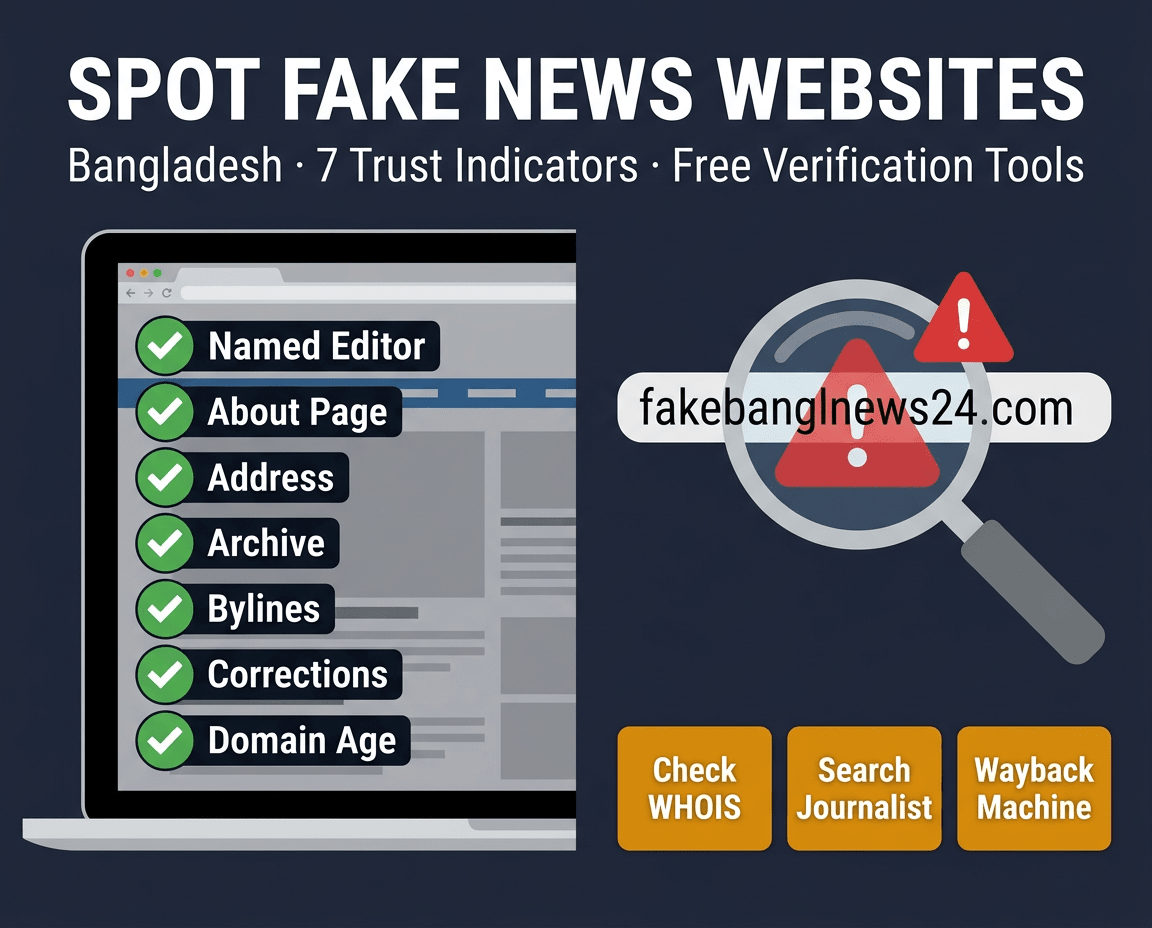
The role of Facebook as a news distribution platform simultaneously amplifies and complicates this picture. As WINTK's coverage of Facebook's role in Bangladesh's social media landscape documents, the platform distributes both legitimate independent reporting and coordinated misinformation at scale — often indistinguishably. The algorithmic amplification of engaging content means that false or sensational stories frequently travel faster than verified reporting. Independent digital journalists who build audiences on Facebook are simultaneously leveraging the platform's reach and operating within a system that does not systematically distinguish credible reporting from fabricated content.
YouTube has become the primary channel for long-form news commentary and investigation in Bangladesh that would be difficult to broadcast on licensed television channels. Independent channels with hundreds of thousands of subscribers operate outside the ownership structures that constrain traditional broadcasters, though they operate within the same legal framework — and face the same legal risks — as print and broadcast journalists.
Cyber Security Act 2026 — Impact on Journalism
The legal framework governing online journalism in Bangladesh has gone through three iterations in eight years: the ICT Act (2006), replaced by the Digital Security Act (2018), replaced by the Cyber Security Act (2023), which was itself repealed in May 2025 and replaced by the Cyber Security Ordinance (CSO). Each transition has been accompanied by promises of reform and concerns from press freedom organisations that the new framework retains the most dangerous provisions of its predecessor.
The DSA was, by multiple international assessments, one of the world's most restrictive press freedom laws. It allowed arrest without warrant, seizure of electronic equipment without court order, and violation of source confidentiality on broad national security grounds. Between 2018 and 2023, it was used to arrest 97 journalists and prosecute 255. The Clooney Foundation for Justice's TrialWatch documented 222 cases involving 396 journalists in a November 2025 report.
The CSO of 2025 removed nine controversial provisions from the DSA/CSA framework. Freedom House's Freedom on the Net 2025 report gave Bangladesh a slightly improved score following the repeal, but retained significant concerns. Section 26 of the CSO — which criminalises content "related to any religion or communal hate speech" that "creates anxiety" — is broadly enough worded to be applied to reporting that explores religious tension or communal incidents, which are recurring news topics in Bangladesh. The CSO retains criminal penalties for online speech and surveillance provisions that give authorities access to communications data.
For the full analysis of what the Cyber Security Ordinance removes and what it retains, and what this means for journalists and ordinary digital users in Bangladesh, see our Bangladesh Cyber Security Act 2026 guide to sections removed and changed.
International Support and Press Freedom Organisations Active in Bangladesh
Several international press freedom organisations actively monitor and intervene in Bangladesh's media environment. Their work — documenting violations, issuing statements, making representations to governments, and providing legal and financial support to threatened journalists — represents the primary external accountability mechanism for Bangladesh's press freedom situation.
Reporters Without Borders (RSF) maintains a dedicated Bangladesh country page, publishes the annual World Press Freedom Index ranking (149th/180 in 2025), and issues regular statements on specific incidents. Following the February 12, 2026 election, RSF published detailed policy recommendations to the new BNP government. RSF has called specifically for PM Tarique Rahman's government to enact a journalist protection law, end impunity for crimes against media professionals, and drop baseless charges against the 140+ journalists still facing proceedings.
Committee to Protect Journalists (CPJ) documented the arrests and prosecutions of Bangladeshi journalists throughout the Hasina era and continued monitoring through the transition and into 2026. In March 2026, CPJ and eight other human rights organisations co-signed a letter to PM Tarique Rahman calling for the release of detained journalists, review of cybercrime cases, and implementation of Media Reform Commission recommendations aligned with international press freedom standards.
Freedom House publishes an annual Freedom on the Net report covering Bangladesh's internet freedom environment — distinct from but related to press freedom. Its 2025 report noted improvements from the CSA repeal but retained concerns about the CSO's overbroad provisions.
Article 19 — the international organisation dedicated to freedom of expression — has consistently called for the repeal of Bangladesh's successive restrictive digital laws and monitors their application against journalists and bloggers.
The Clooney Foundation for Justice's TrialWatch published a detailed analysis in November 2025 documenting 222 DSA cases involving 396 journalists — providing the most comprehensive public database of how the law was applied to suppress journalism between 2018 and 2023.
Domestically, the Centre for Governance Studies (CGS) in Dhaka has produced the most rigorous quantitative research on press freedom violations in Bangladesh, providing the statistical foundation for international reporting on DSA prosecutions. RSF's resident correspondent in Bangladesh — who died in February 2026 after more than 30 years of covering the country — built the most sustained single-person body of documentation of Bangladesh's press freedom conditions over that period.
Press Freedom and Bangladesh's Democratic Transition
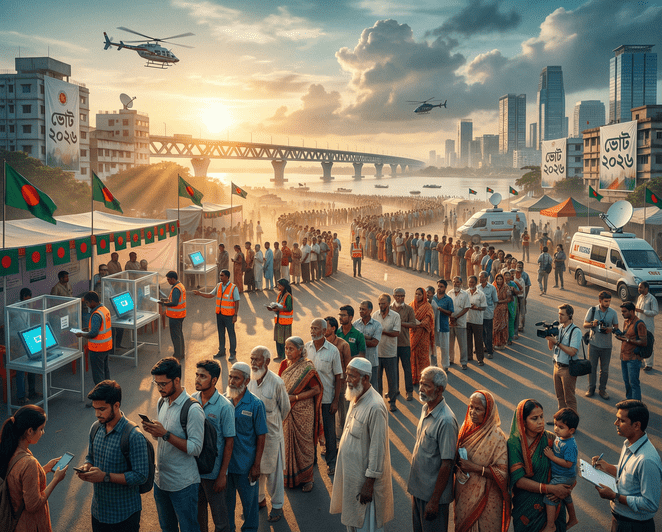
Press freedom and democratic consolidation are not separable questions in Bangladesh's 2026 context. The February 12 general election — covered in WINTK's detailed analysis of the BNP's landslide victory and the 127 million voter election — produced a legitimate government with a genuine mandate. But the legitimacy of an elected government does not resolve the structural conditions that have made independent journalism in Bangladesh precarious for decades.
Those structural conditions include: media ownership concentrated in the hands of business interests aligned with successive governments; state broadcasters with no editorial independence; a legal framework that has been revised repeatedly but consistently retains provisions that can be used against journalists; a judiciary that has been instrumentalised to process politically-directed cases; and a culture of self-censorship that operates across newsrooms regardless of which government is in power.
RSF's post-election statement captured this clearly: Bangladesh's new government has inherited both an obligation and an opportunity. The obligation is to address the specific, documented harms done to journalists under the Hasina government — the cases, the prosecutions, the credential revocations, the impunity for physical attacks. The opportunity is to create a structural framework in which these patterns cannot recur under any future government. Whether the BNP government acts on both is the press freedom story Bangladesh's journalists will be covering — and experiencing — throughout 2026 and beyond.
Frequently Asked Questions
What is Bangladesh's press freedom ranking in 2026?
Bangladesh ranked 149th out of 180 countries in Reporters Without Borders' 2025 World Press Freedom Index — the most recent full ranking available as of April 2026. This represents an improvement from its historic low of 162nd in 2022, but still places Bangladesh in the bottom quarter of countries globally.
How many journalists have been arrested or prosecuted in Bangladesh?
Between 2018 and 2023, 97 journalists were arrested and 255 prosecuted under the Digital Security Act alone, according to Centre for Governance Studies data cited by RSF. After August 2024, more than 140 journalists faced charges — many on murder or "crimes against humanity" allegations — for their coverage under the Hasina government. Twenty-five were listed in a war-crimes complaint at the International Crimes Tribunal.
What happened to Bangladesh's Digital Security Act?
The DSA (2018) was replaced by the Cyber Security Act (2023), which was then repealed in May 2025 and replaced by the Cyber Security Ordinance (CSO). The CSO removed nine controversial provisions but retains a broadly-worded Section 26 on content "creating anxiety" related to religion, and criminal penalties for online speech. Press freedom organisations including RSF and Freedom House have called for further reform.
What organisations monitor press freedom in Bangladesh?
The key organisations are: Reporters Without Borders (RSF), Committee to Protect Journalists (CPJ), Freedom House, Article 19, and the Clooney Foundation for Justice's TrialWatch. Domestically, the Centre for Governance Studies (CGS) produces the most rigorous quantitative documentation of press freedom violations. In March 2026, CPJ and eight other organisations co-signed a letter to PM Tarique Rahman calling for specific press freedom reforms.
Is press freedom improving under the new BNP government in Bangladesh?
The situation is mixed as of April 2026. The election of a legitimate government after 15 years of authoritarian consolidation is a structural improvement. However, fresh incidents — journalist beatings by BNP supporters in February 2026, dismissals for asking critical questions, and slow progress on dropping inherited cases — indicate that the media environment has not been fundamentally reformed. RSF, CPJ, and the Media Reform Commission have all published specific recommendations to the new government for structural change.